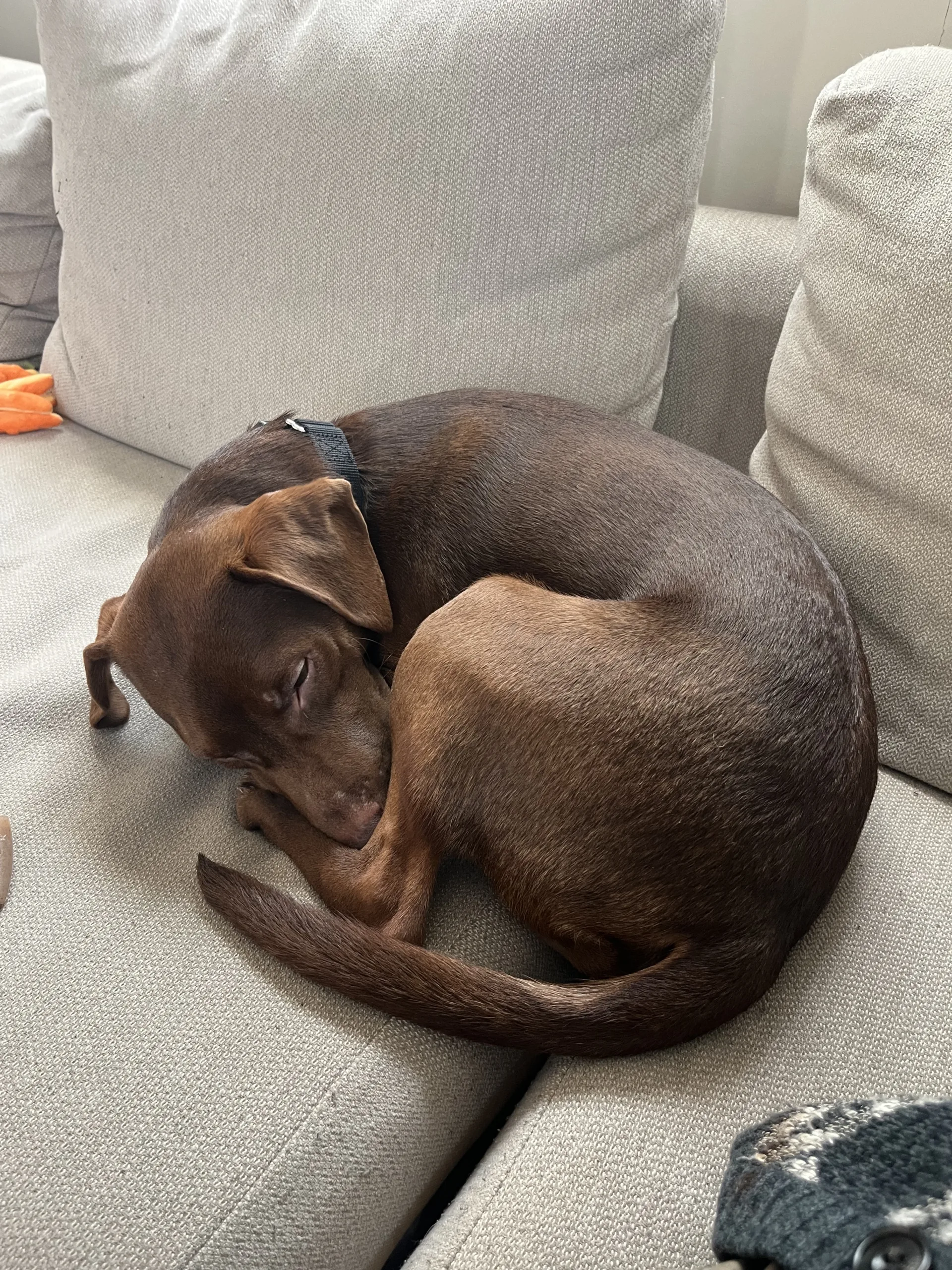
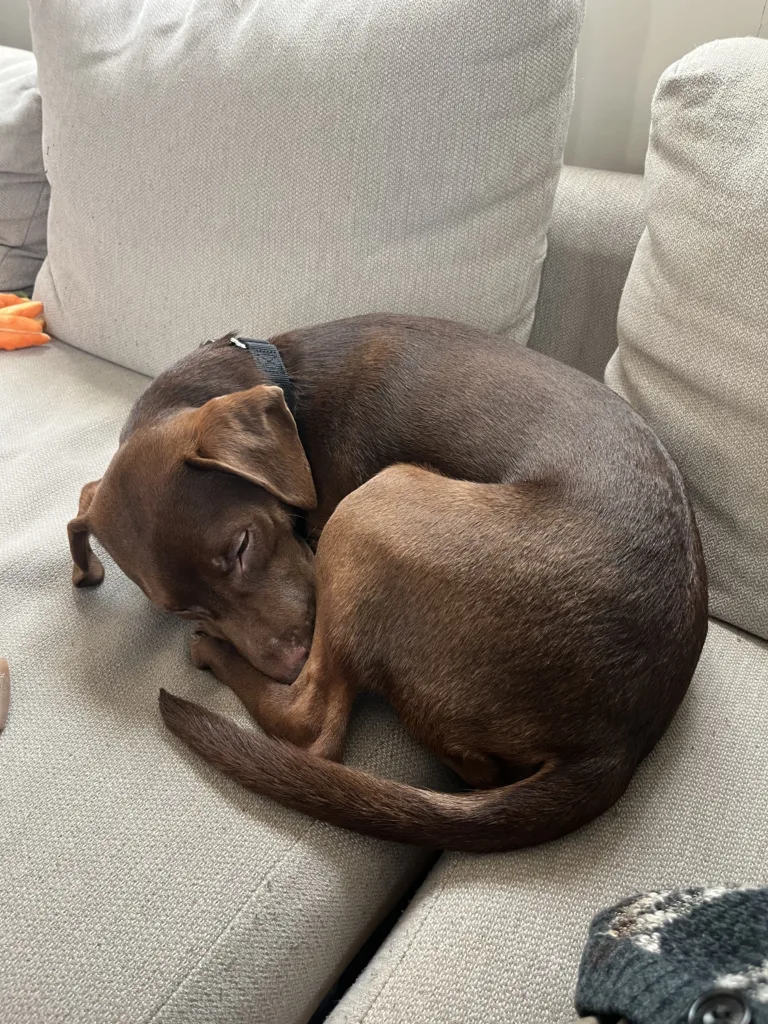
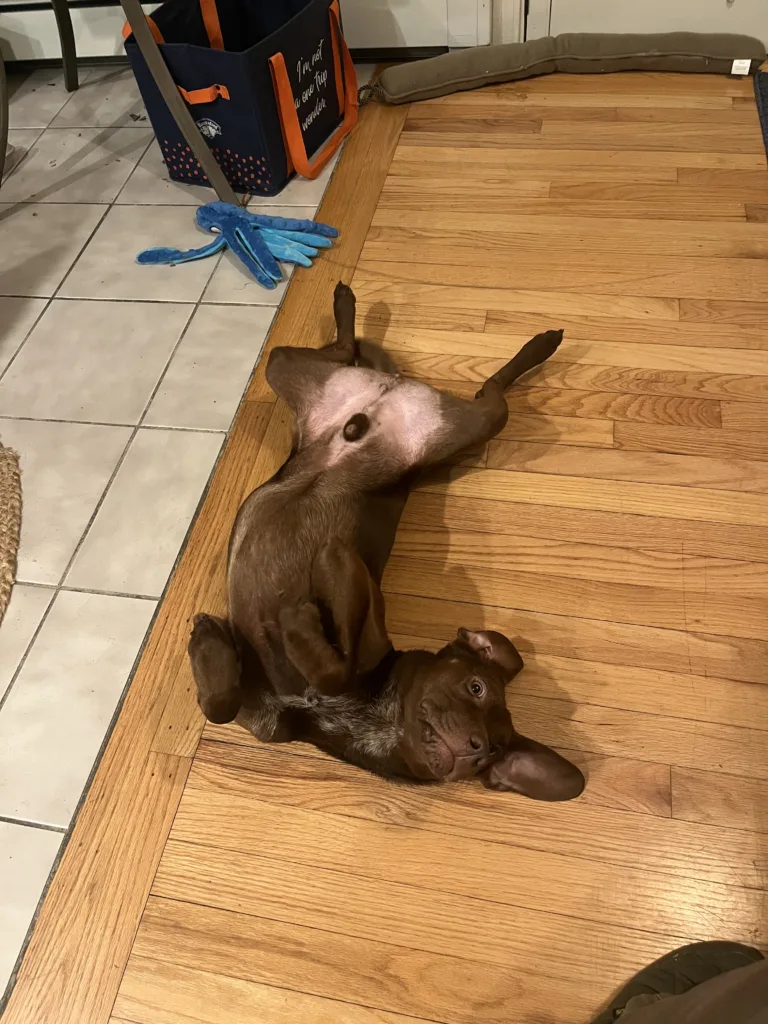
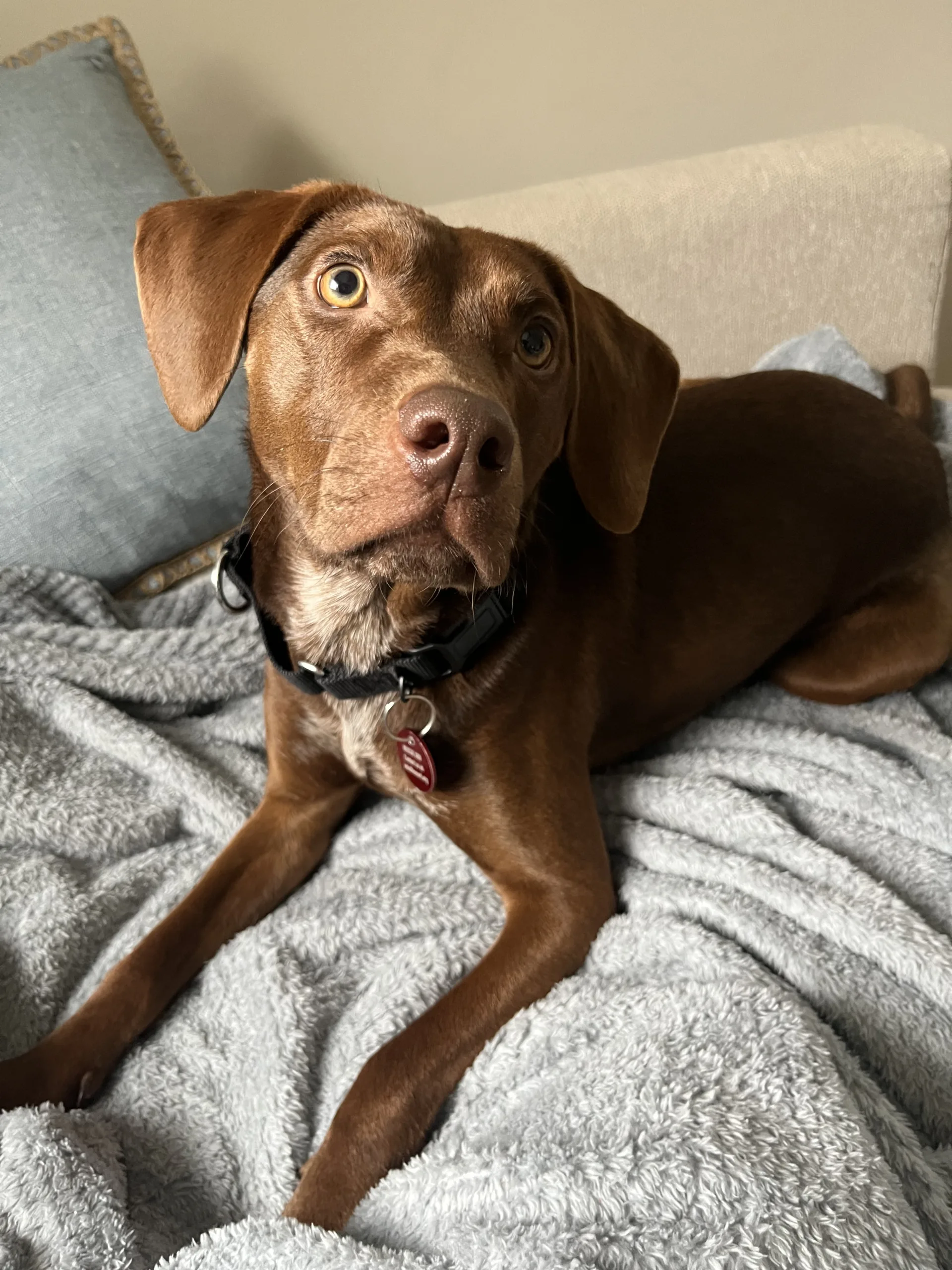
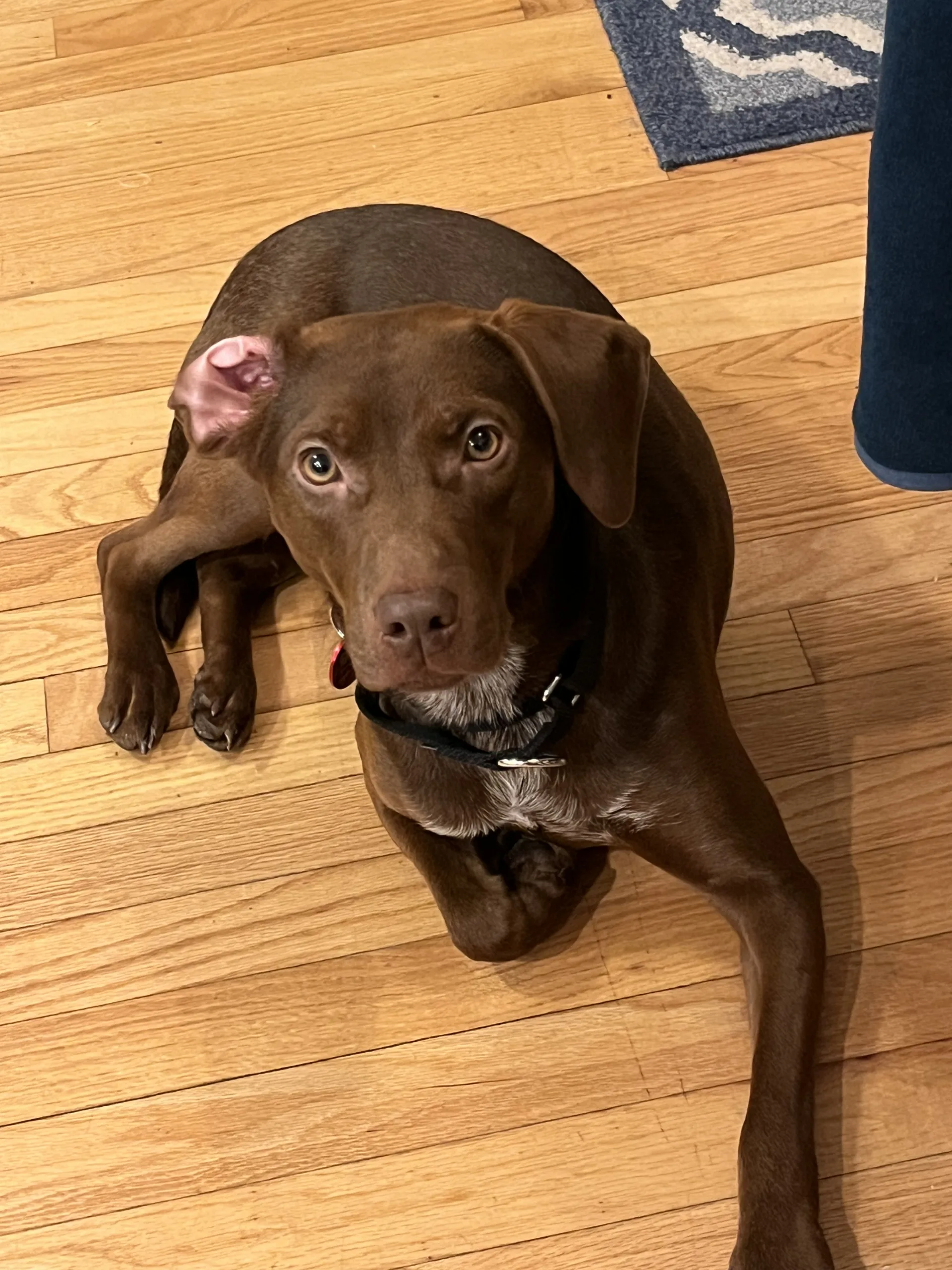
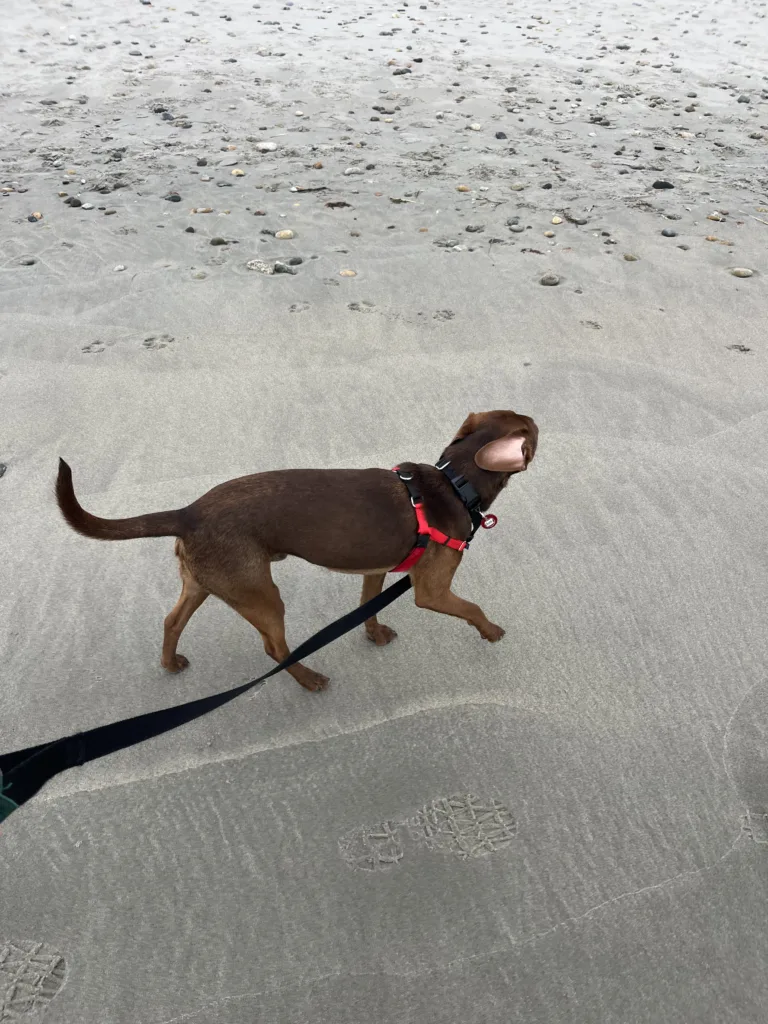
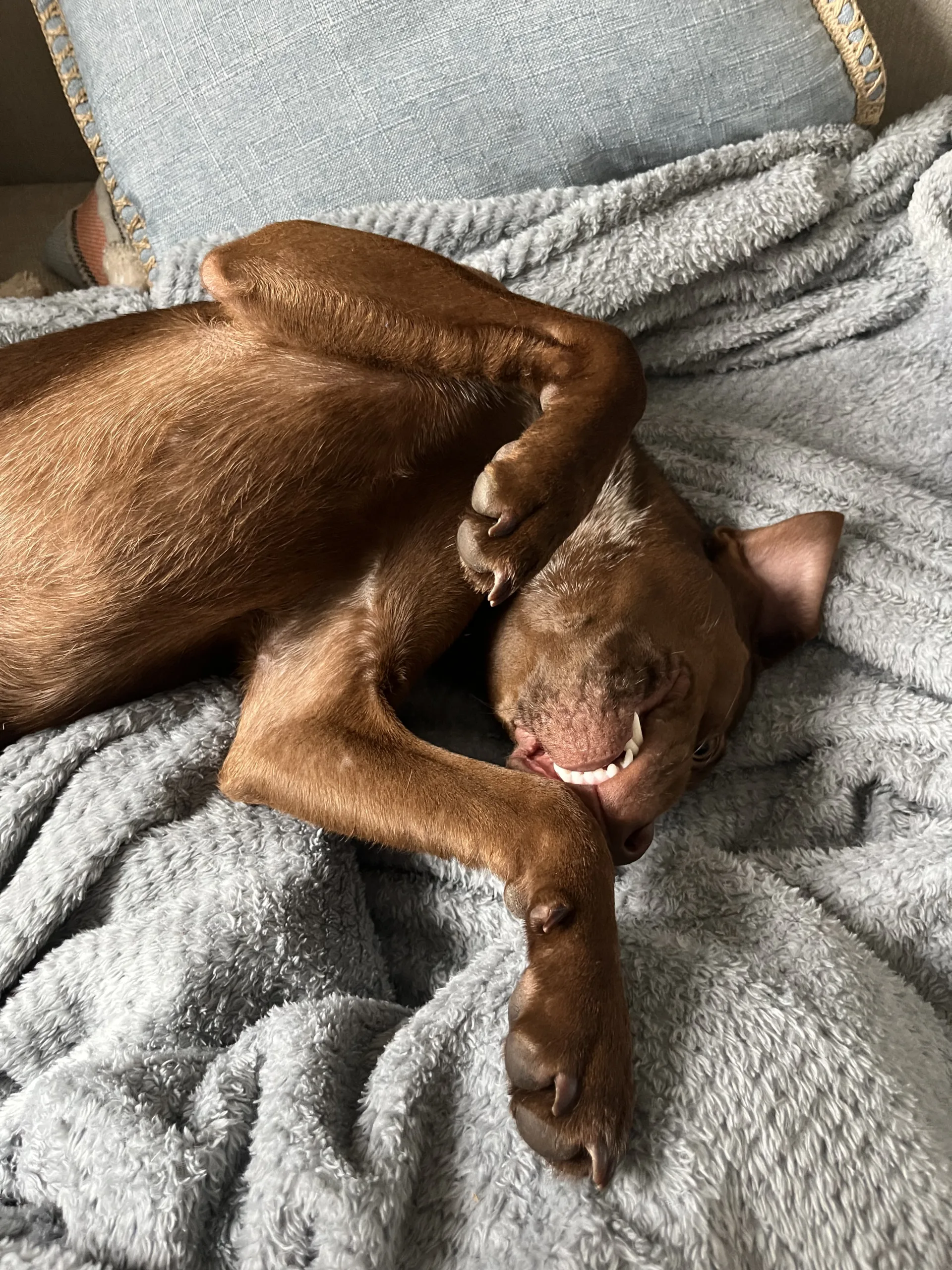
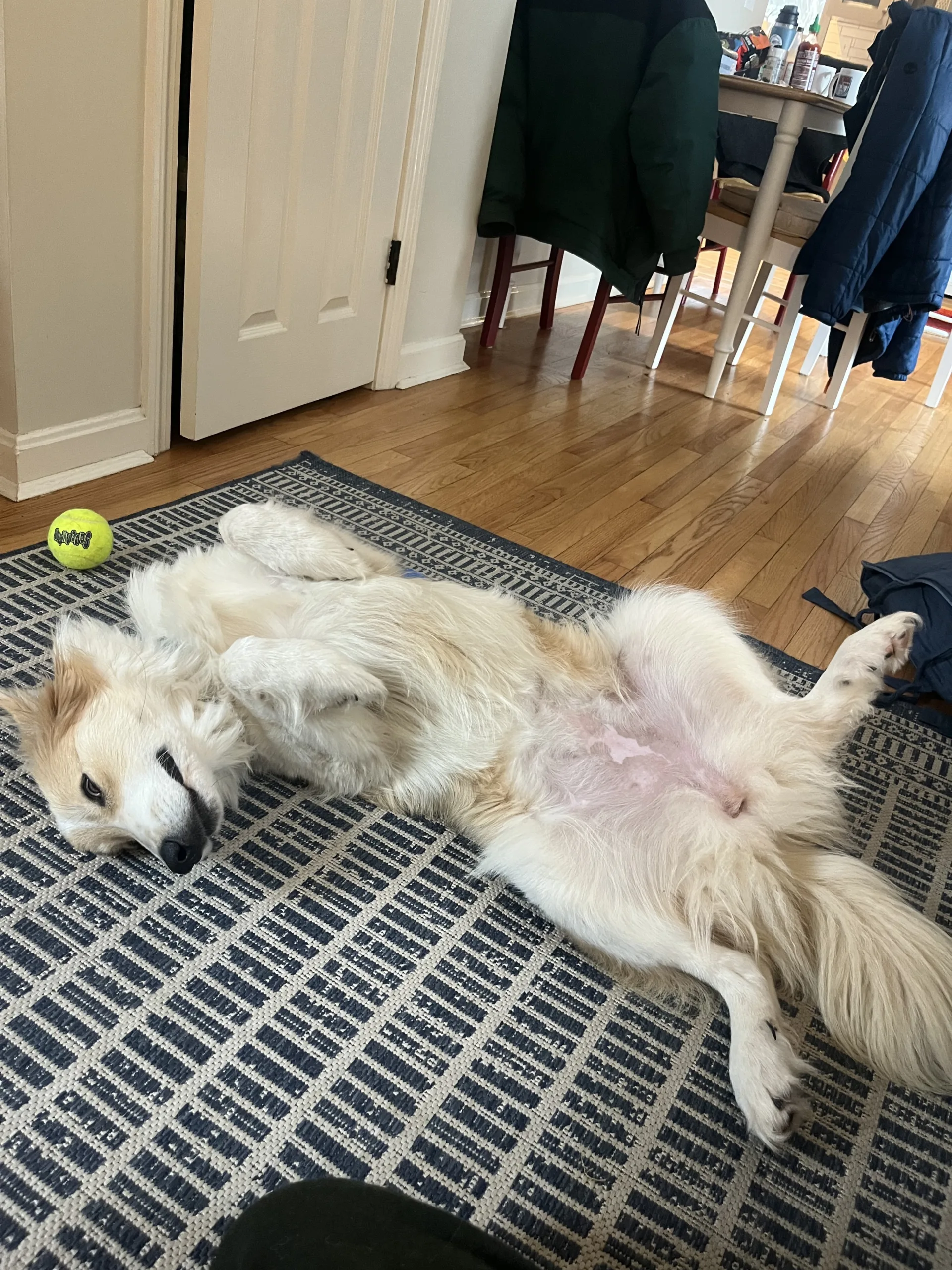
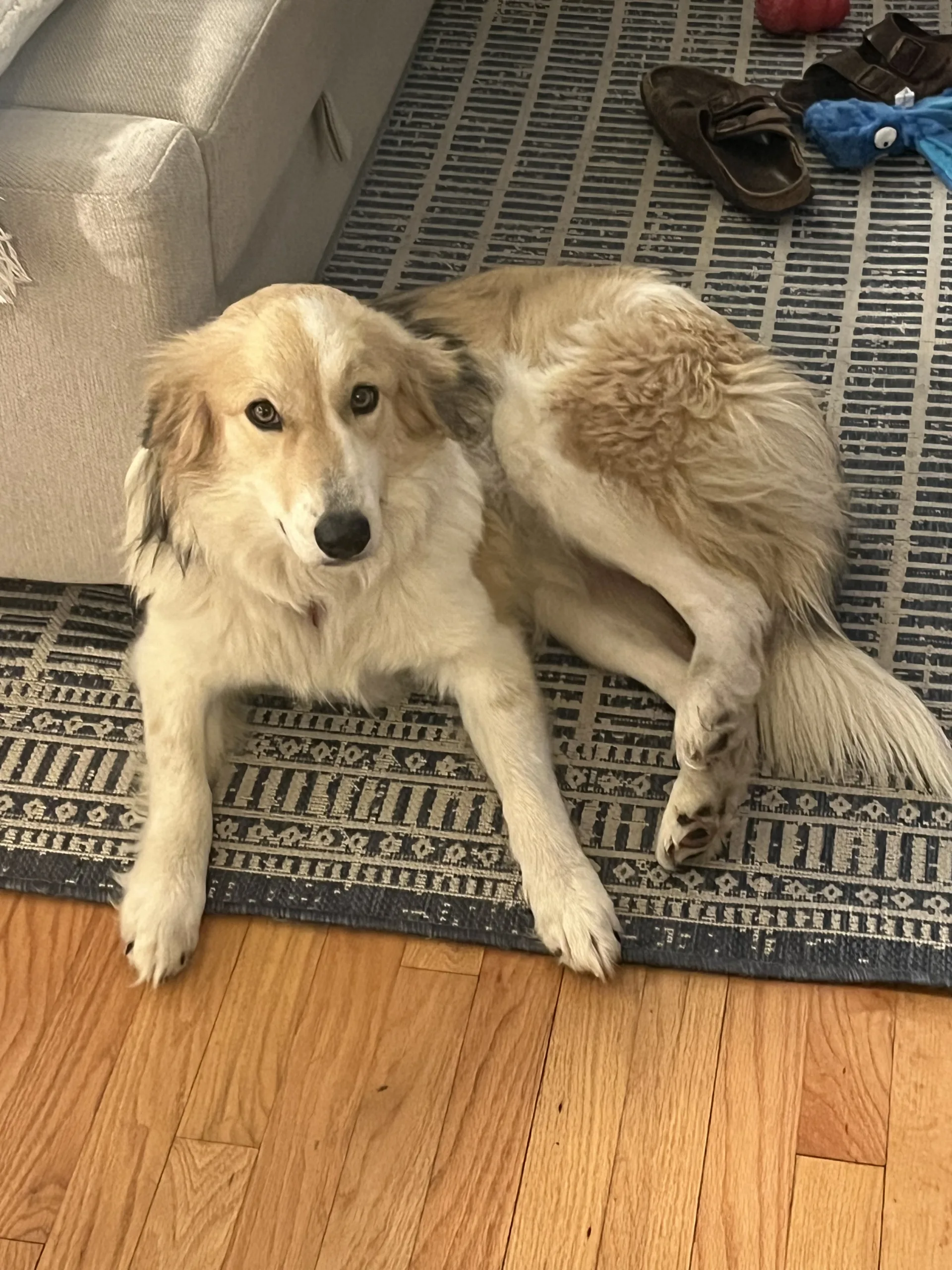
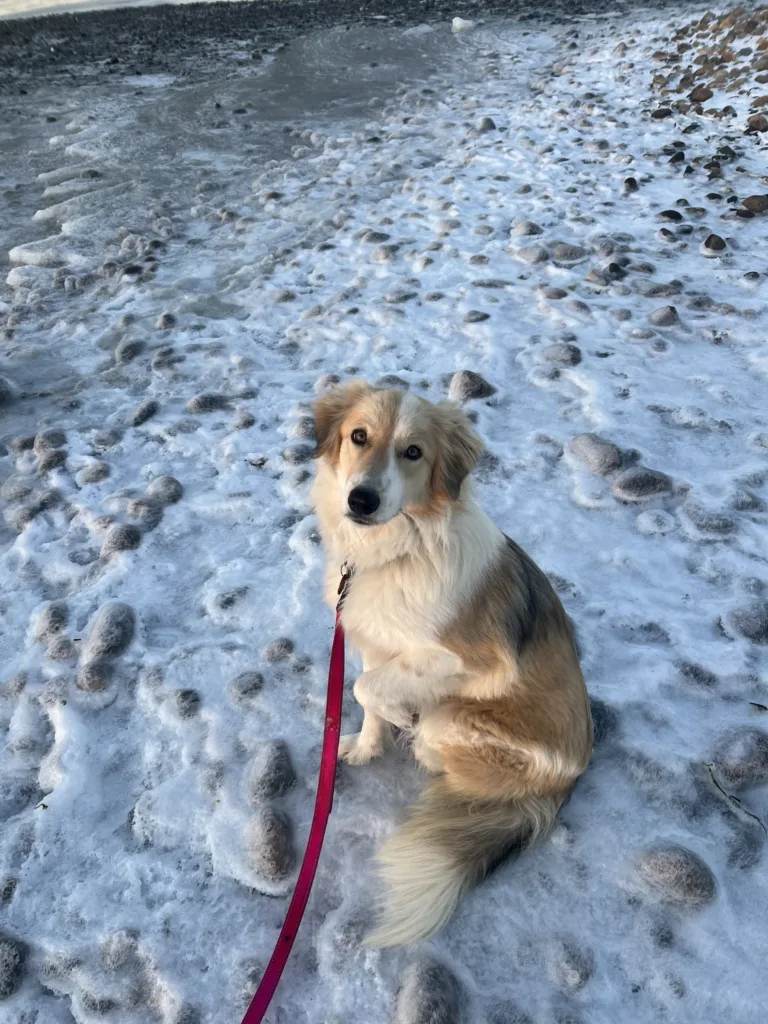
Buddy came to us on pretty short notice. He had been foster-to-adopted, but unfortunately, his adopter’s had a dog that responded very poorly. He had to get re-homed on short notice, and luckily, we were available.
After having him for a week, we took Buddy to an adoption event at a local brewery. He was great for the first hour, but I could see him getting more fussy and impatient as the event went on. It was easy to forget that he was just a puppy. Our first foster was 10 months, while Buddy was 8 months. I didn’t realize how much of a difference 2 months makes. Thankfully, we met the folks who would eventually adopt him at that event, and we knew he would be in good hands.
The Highs
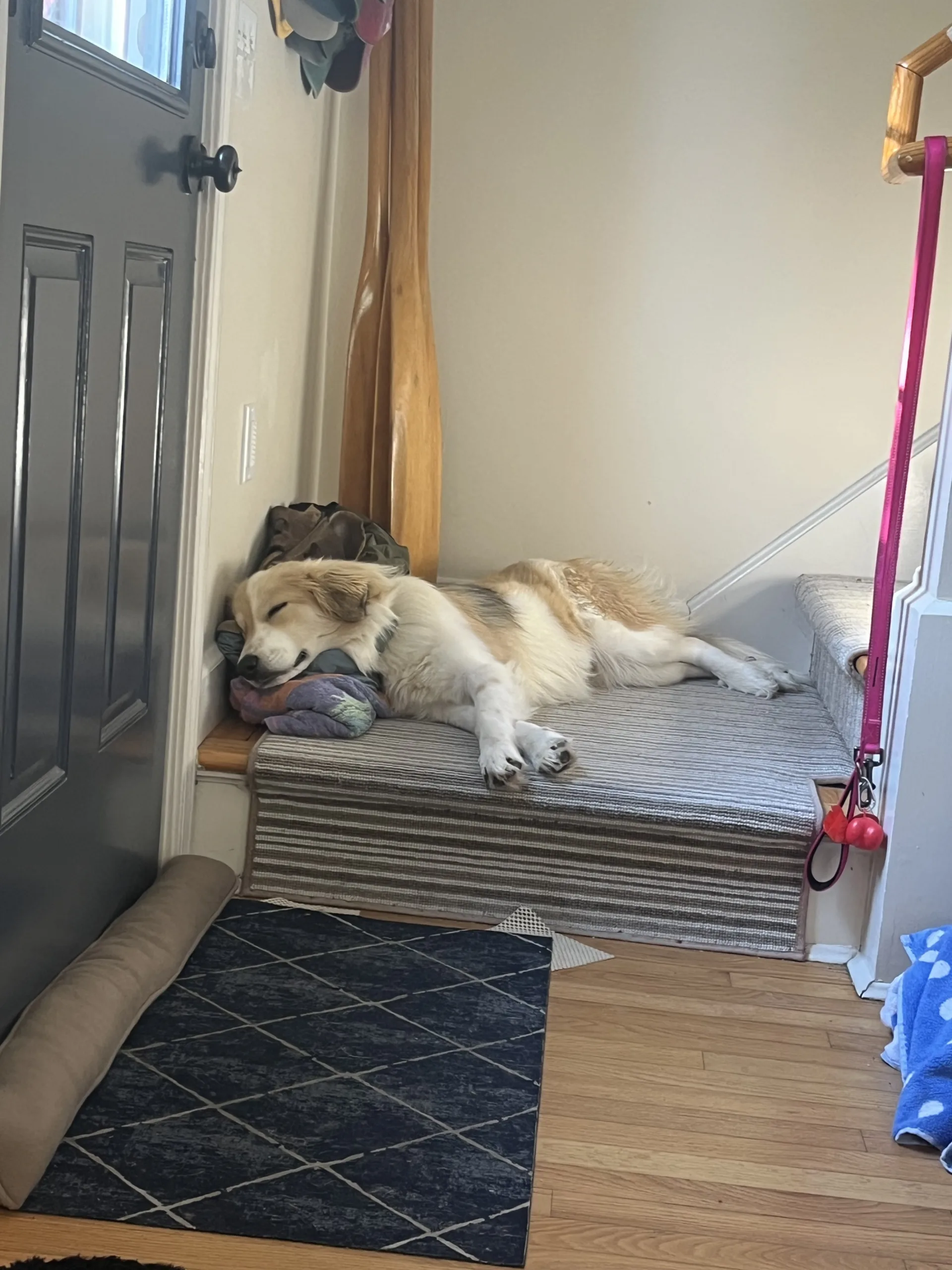
Having more time with him we were able to do some training and really start to see his silly personality. Ian was really smitten and we kept thinking about keeping him. While we had him, I enrolled in an introductory training class and learned some new techniques for basic commands. Everyone in our neighborhood loved Buddy and lots of folks encouraged us to foster fail. Anyone could see that he’d be a great dog as long as he kept getting training as he got older.
The Lows
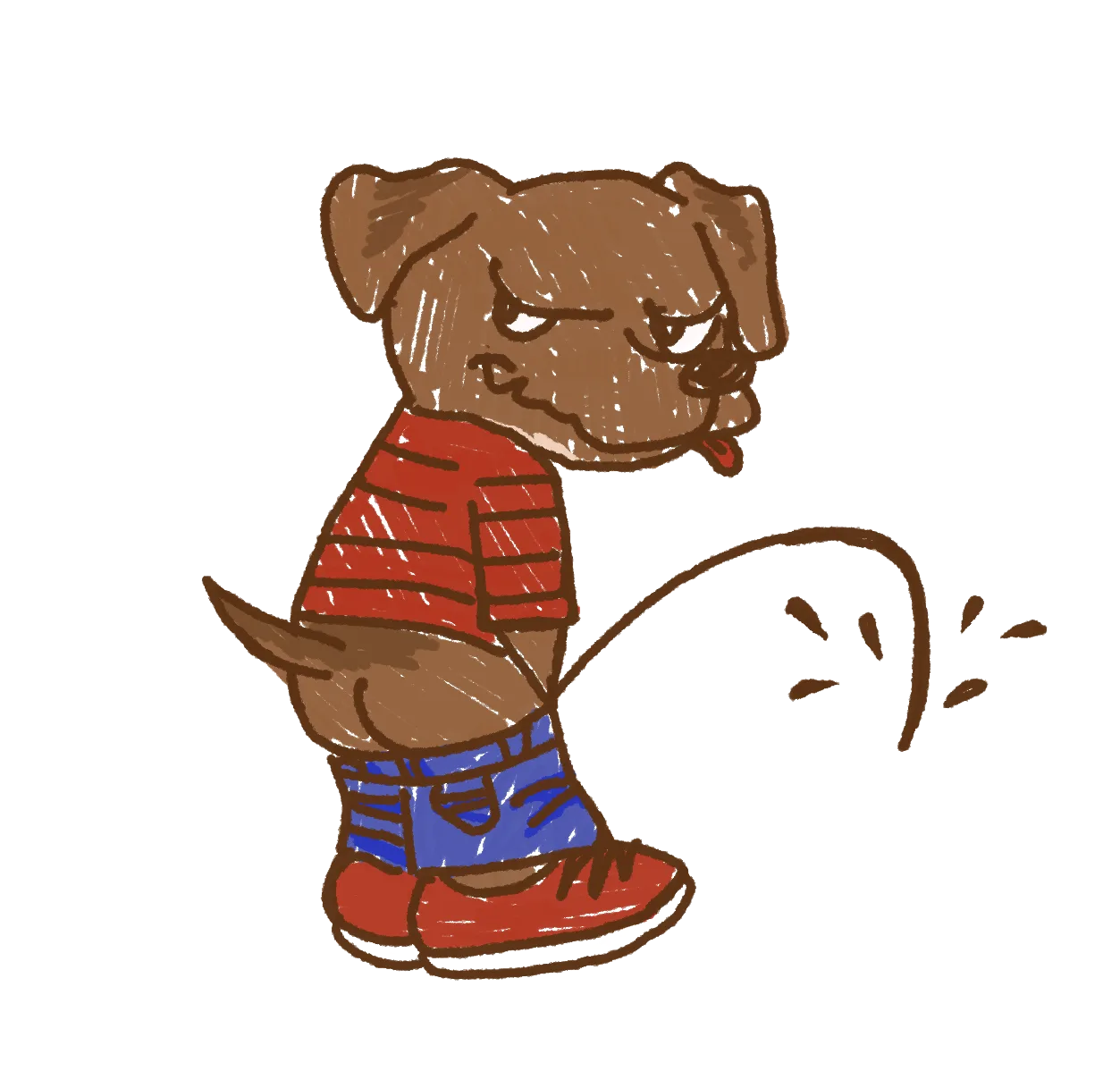
Tragically, Buddy had a bought of evil digestion in the second week we had him. We had a couple of long and gross nights of colitis poops. Buddy didn’t mind the week of chicken and rice meals though. I’ve never been so relieved to be able to pick up a solid poop.
My partner and I have been talking about getting a dog for a while. But it’s really important to us to do right by any critter we’d be responsible for. And ultimately, we realized that right now, we can’t provide a consistent and routine lifestyle all of the time. But we are available in short bursts, so we decided to look into fostering. We had met some folks from SOSARL at a big adoption event in the fall of 2025. I still had their contact info and decided to submitter foster application. Once we went through the process, got interviewed and approved, it wasn’t too long before we were assigned our first foster: Sophie!
Bio
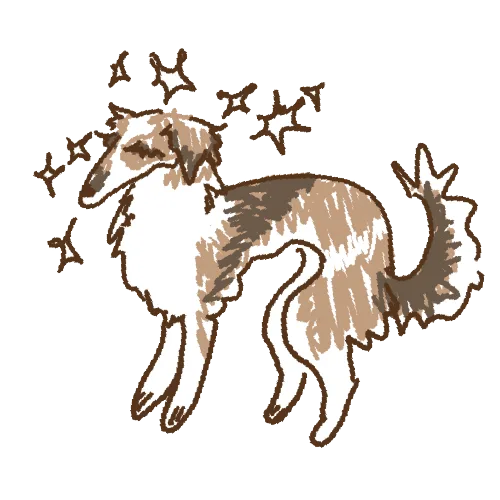
Name: Sophie
Breed: collie mix (definitely part great pyr)
Age: 10 months
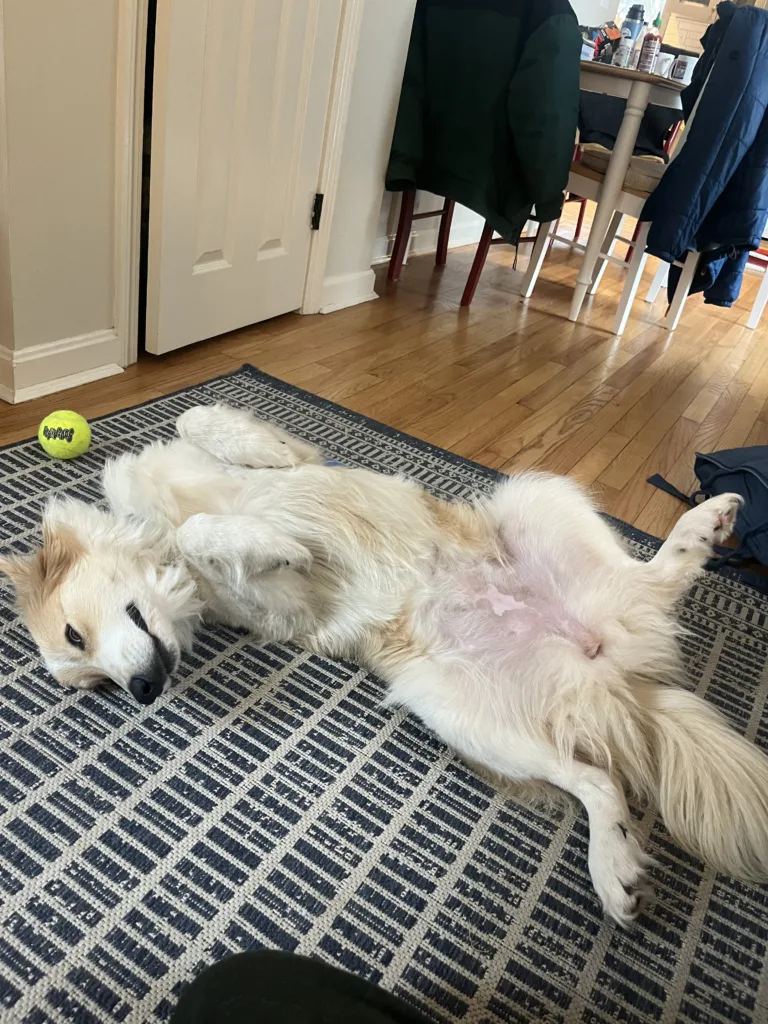
Quirks: Immediately goes for the belly rub
Human Job: supermodel due to her permanent eyeliner
Duration of Stay: 1 week
Reflection
We knew we wouldn’t have her long since she was so pretty, so sweet, and so smart. We had Sophie for just one week. That was enough time to really enjoy her company but not so much that we couldn’t say goodbye. We were able to meet the folks who adopted Sophie, who were a great couple who already had a friendly pup with a similarly fluffy tail. We knew she’d be happy in her new home with a new brother to play with.
The Highs
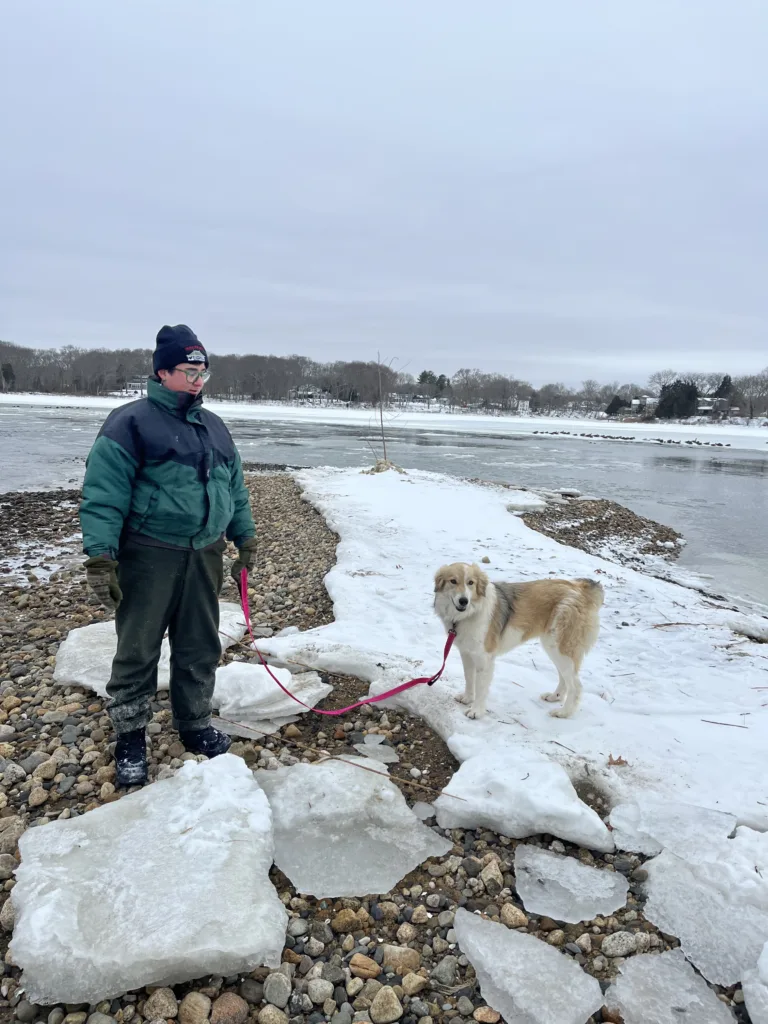
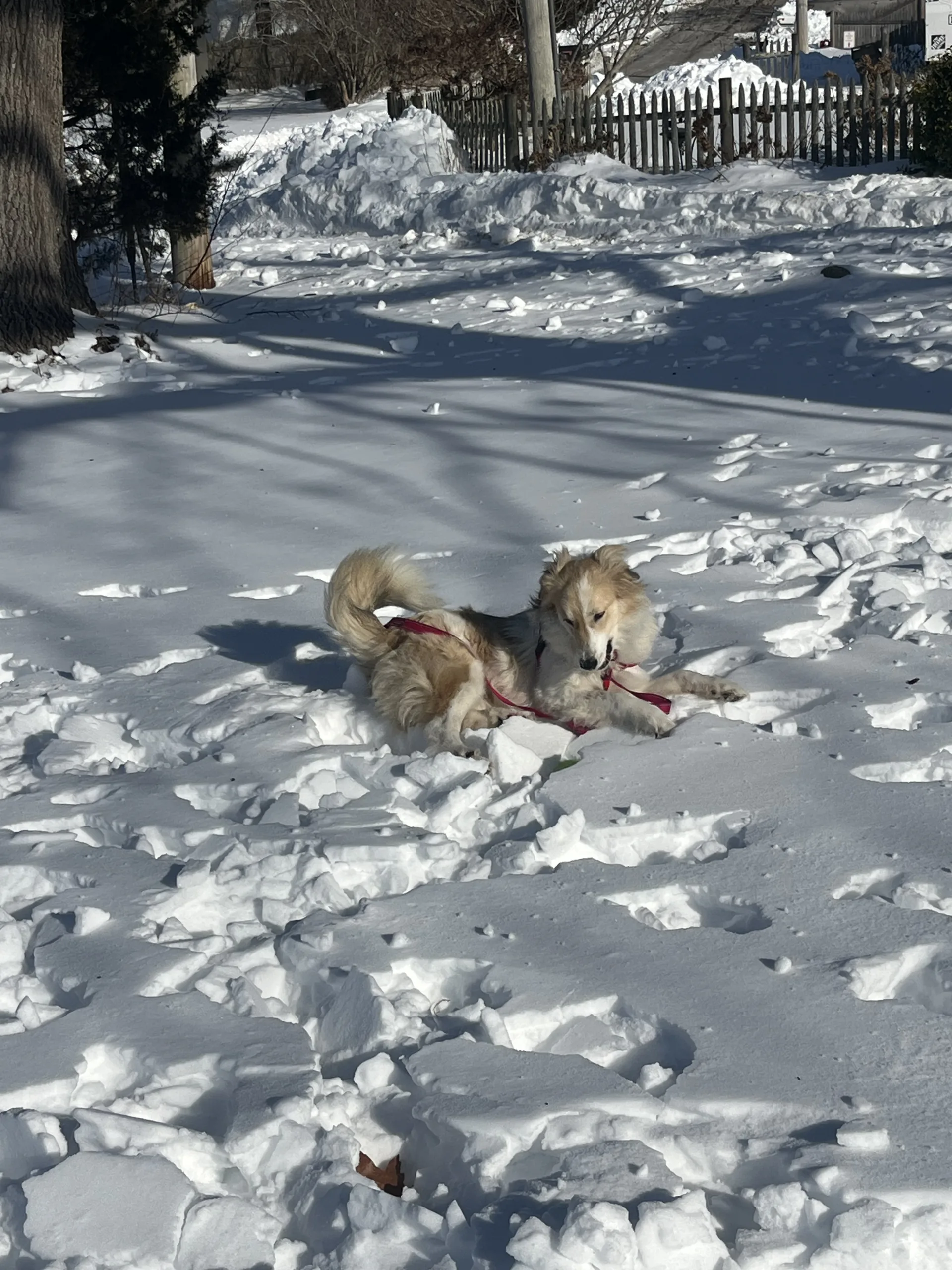
Sophie was extremely sweet and smart, so it was really easy to love her. We think she had previously been a stray, so everything was new to her. We taught her some basic commands, how to use the stairs, and how much fun it is to run in the snow. If you walked past her, she’d always roll over and insist that you paid the belly rub tax.
The Lows
Sophie went on the world’s fastest crime spree. In the span of 10 minutes, she chewed through her leash, my phone charger, and Ian’s shoe laces.
She really hated being in the car and in the crate. it was really hard to see her so uncomfortable and scared. If we had more time with her, I’m confident she would have overcome her fears.
Whenever I’m doomscrolling on social media, I inevitably am drawn into the black hole of nihilism content. People, especially Americans, look at the world around them and don’t like what they see. And they feel powerless to do anything. The problems seem so big and it makes us feel so small that it can feel pointless to do anything at all. But that’s wrong! You can make a difference! And the biggest changes start with tiny baby steps.
Step 1: Commit to Something
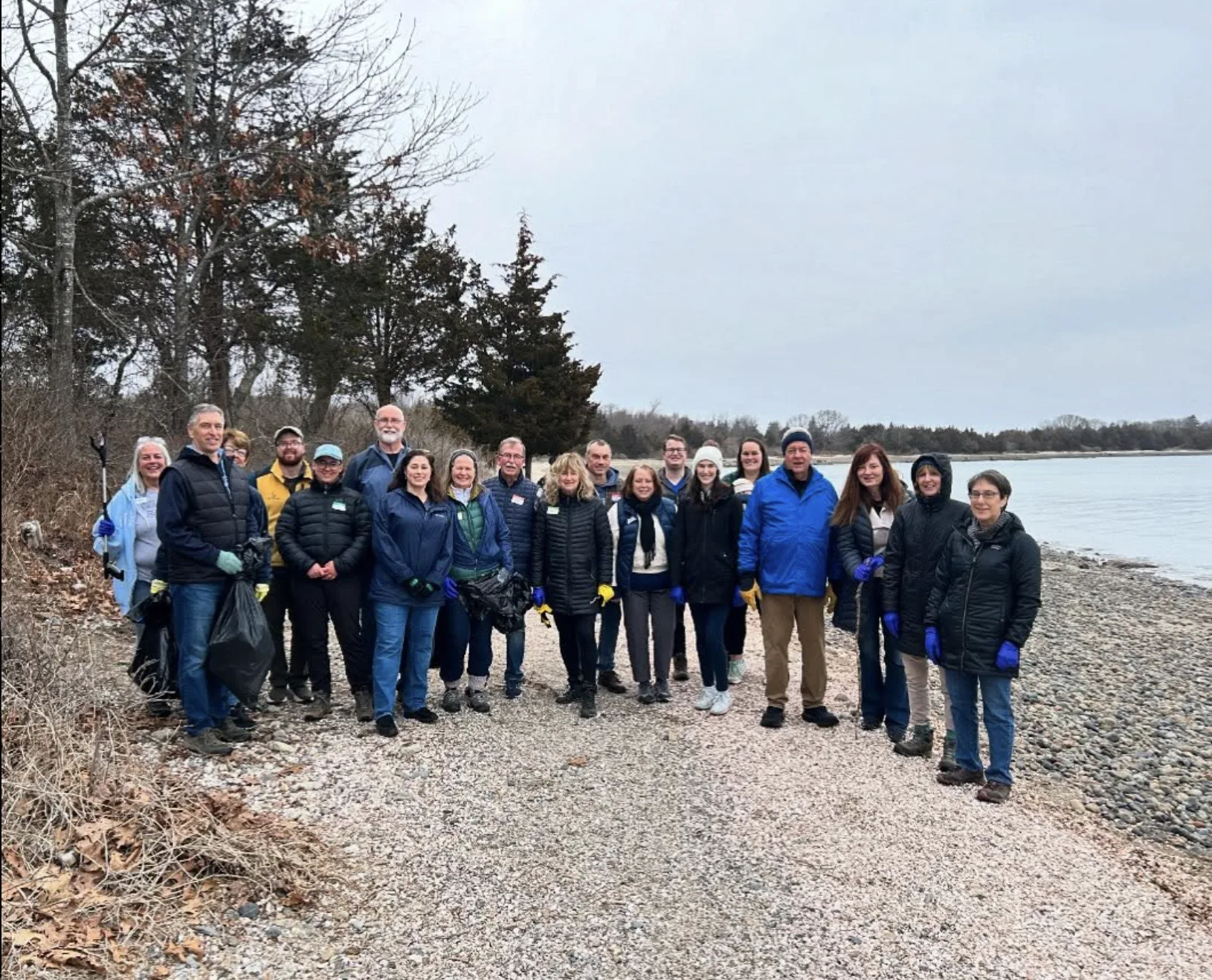
The first step is to decide you want to do something. It seems obvious, but looking at the world around you, you’ll find there’s a lot of things you’d like to see change. And it can be paralyzing to see how big some of the problems of the world are. What can one person do? Well, it’s easiest to start small, start personal, and start local. Picking something achievable helps you build new networks of other motivated people and can help your ideas gain momentum.
For me, I started with the arts. As a lifelong artist, I am very intimately familiar with how important arts and culture are to the fabric of society and the benefits they have for our wellbeing. I live in a town, so for me, it was as easy as applying to the Arts Council, which is associated with the Town Council (more on that in this other blog). If you live in a city, municipal governance might have a higher threshold for entry. So, consider looking at local advocacy groups and nonprofits.
How to Find a Cause
Start with what you care about. Your morals, your hobbies, your experiences. Are you religious, a veteran, a vegetarian? Focus on one issue that sticks out to you. Try looking at local bulletin boards at your grocery store or the library to find groups that are already in your area.
Places that always need volunteers:
Senior centers & meals on wheels services
halfway houses & domestic abuse support centers
libraries
VFW halls & veterans services
food banks, social services, & homeless shelters
town councils & committees
animal shelters
school & youth events
Step 2: Just Do It ✅
Once you’ve found a cause you want to support, you need to decide what you want to contribute. There are a lot of ways to contribute and you can do as much or as little as you want. Passive support, like donating to a food drive or posting on social media are great and necessary. But the things that need the most help are going to be more time consuming, and usually in-person.
Skill-based ex: mending, social media posts, cooking
Social ex: phone banking, youth mentoring, door-knocking
Financial ex: recurring donations to non-profits, donating food/clothing to food pantries or shelters, liaising with event funders
Educational ex: teaching skill-based classes, story time at libraries
Organizational ex: filling out paperwork for events, attending organization meetings, organizing protests
The hardest part in getting involved is taking the first step. Swallow your fear and anxiety and just go for it. It may feel insurmountable, but you can join most volunteer organizations by sending an email. For local governance positions, you may need to fill out an application or get your confirmation notarized. Remember, there are people who want to help you, just ask!
Step 3: Profit?
I can’t overstate how satisfying it is to help out. There’s the obvious benefit of the actual target objective, whether it’s a trash pickup or running food to the elderly. Your actions are making an impact for the better. You really start getting those warm and fuzzy feelings the more you do.
And there’s more! You grow your social skills, get more comfortable trying new things, and learn new skills. When you attend events, you inevitably meet new people. You build connections, meet neighbors, and expand your network. That could lead you anywhere from a dinner party to a new job. The more you do, the more you get back. And when you are the one that needs help, you’ll have all of the support of the community you built. Take your first step and you’ll be surprised where the momentum takes you.
In March 2026, I attended the Global Service Jam hosted by MassArt. The Boston Service Jam is a collaborative event centering on developing a functional prototype for a service. There are Service Jams across the globe and everyone gains inspiration from the same prompt. I didn’t know a lot about service design before joining the jam. But all of the skills needed are ones I already practice as a visual designer– creative problem solving, research and prototyping, and developing actionable results. And ultimately, this event looked like a lot of fun!
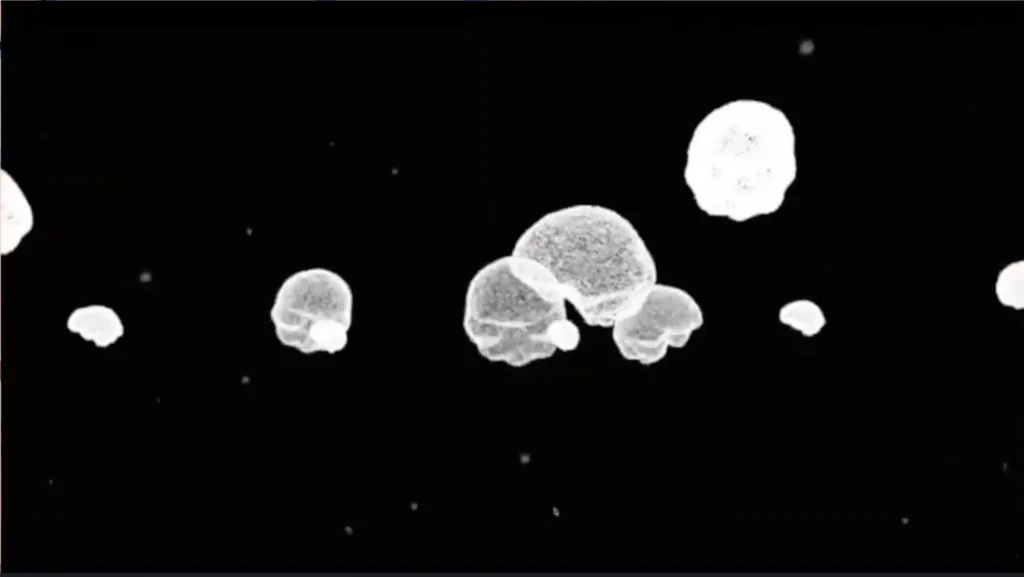
We had just 48 hours to speed run through the process of defining, ideating, and producing a functional prototype for a service. We were given a prompt that was pretty abstract. It gave us a lot of space to define a problem that our whole group was interested in solving.
Some stills from the prompt video
Service Jam Structure
Day 1 Morning: problem and opportunity
Day 1 Afternoon: ideation and solution definition
Day 2 Morning: prototyping, iteration, and testing
Day 2 Afternoon: presentation and feedback
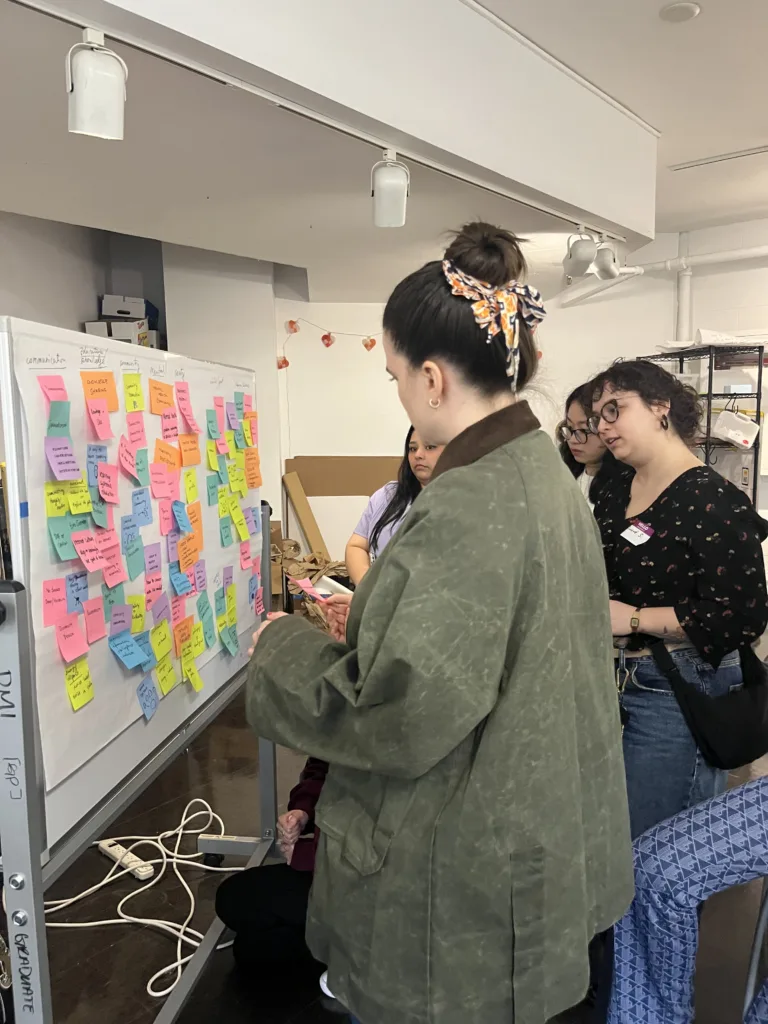
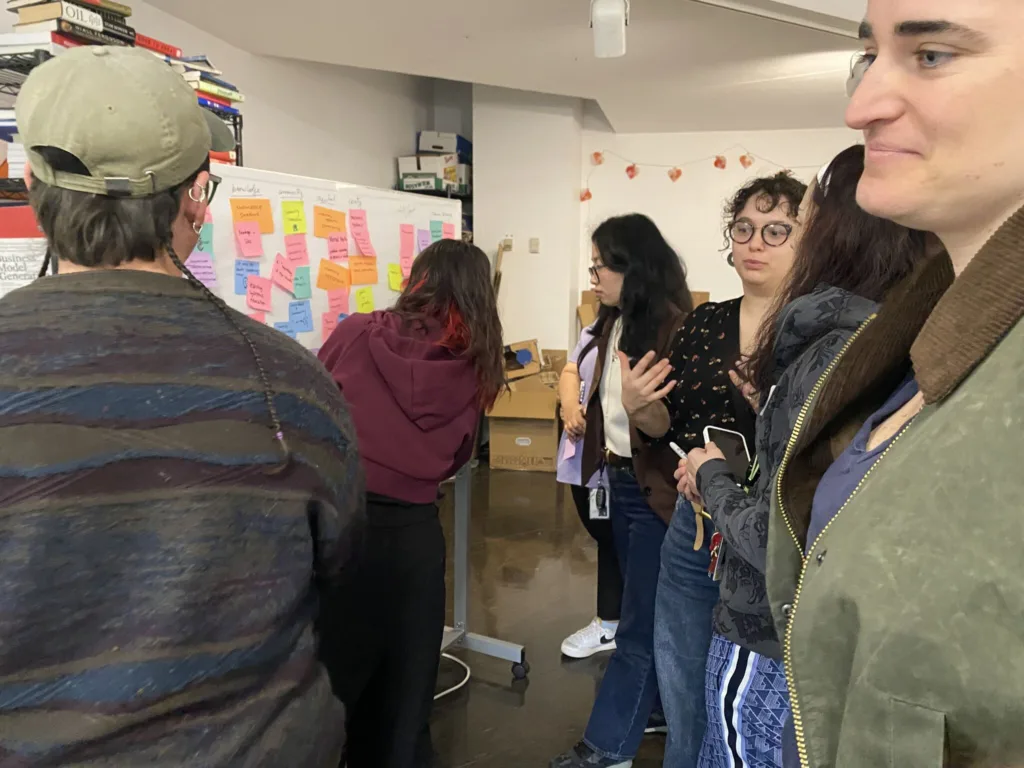
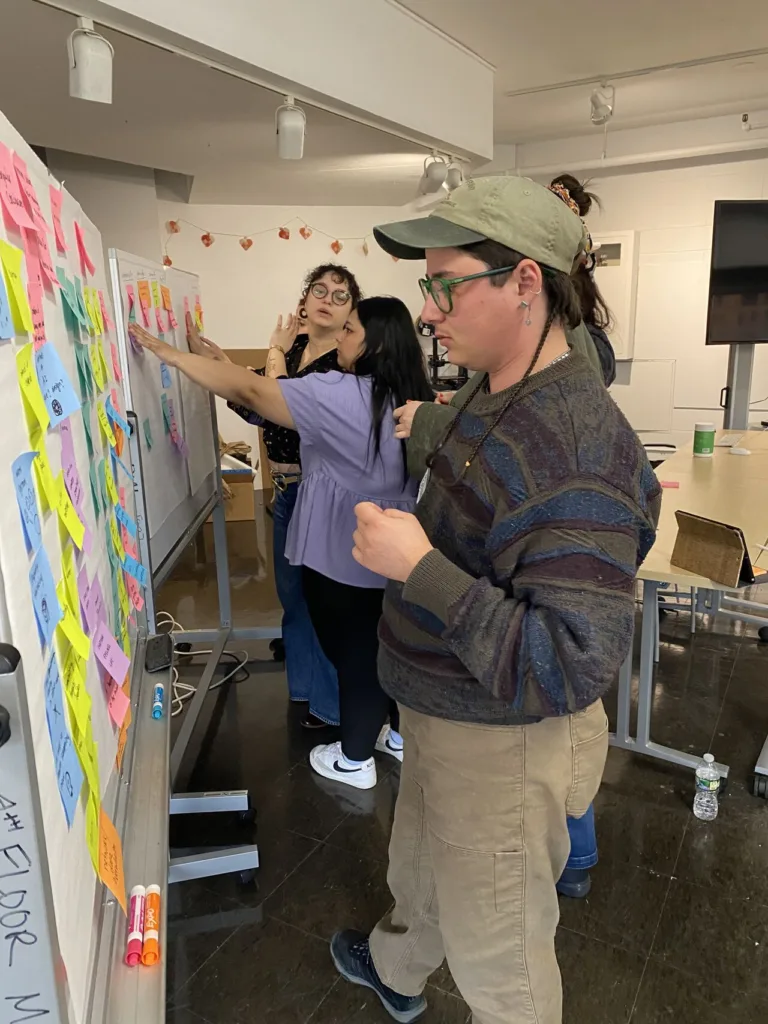
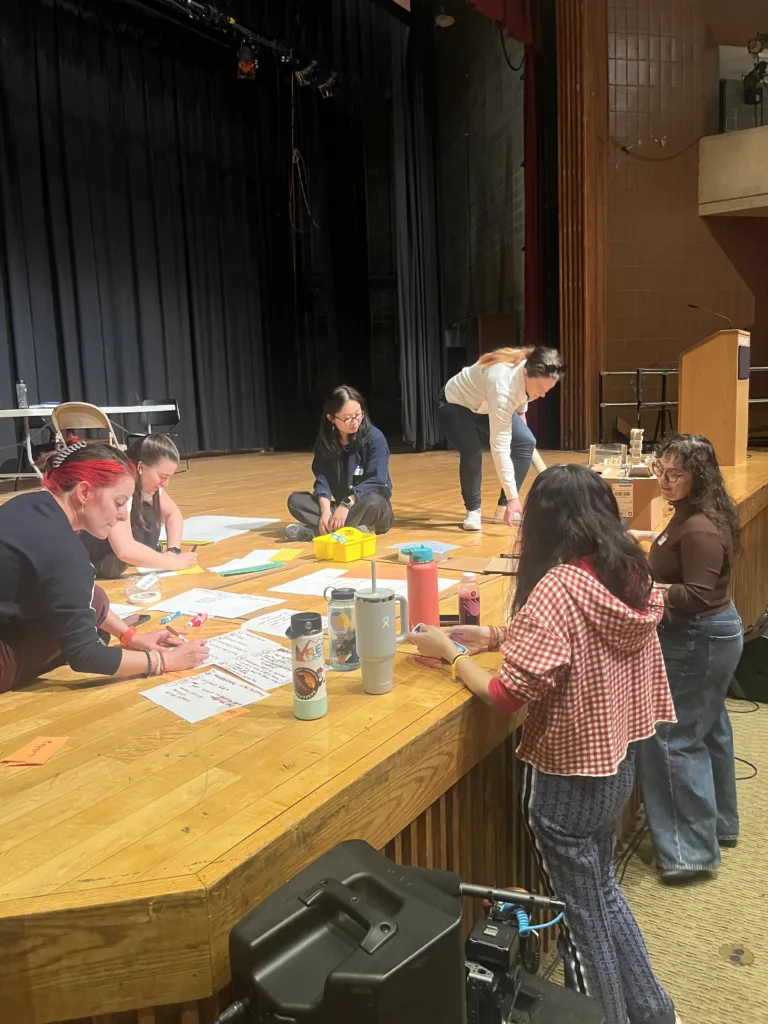
After splitting into groups, we started with idea generation. Inspired by the prompt, we wrote out any concepts and ideas on sticky notes. From our word cloud, we started affinity mapping, creating connections and refining down into the concepts we were the most interested in. Ultimately, the core issues we focused on were loneliness, the lack of inter-generational connection, and knowledge-transfer.
One of our primary challenges throughout the Jam was keeping our scope narrow. We had so many great ideas and a lot of passion behind all of them. But, we needed to focus if we were going to have a tangible presentation at the end of the Jam. After discussing with the team and our mentors, we finally refined our concept to a community-building event series at the local library.
word cloud and affinity mapping
The Librarians
Libraries are a third space, or place that is neither home nor work, where people can exist without spending money. We considered recreation centers and community spaces, but decided to focus on the library because of their ubiquity across rural, suburban, and urban communities. Libraries’s role in society has shifted significantly in the last few decades. Beyond spaces for accessing books, many have taken a more holistic approach to serving their community, such as hosting events, connecting the public with professional services, and providing access to local museums and attractions. However, there is a gap between there is a gap between the public perception (a quiet and dusty space for reading) and reality of libraries as a vibrant and community-connecting space.
Additionally, we were focused on the concept of the village elder and the lack of knowledge sharing we see in our current society. Not only from old to young, but from young to old, from worker to homemaker, from student to teacher, and so on. After some discussion and narrowing our scope (again), we defined our service as a series of community conversations hosted at the library. These conversations would invite knowledge-havers/mentors and knowledge-seekers/mentees to come together in a semi-structured conversation designed to facilitate connection building and enable information sharing.
Our Service Goals
Community Focus
Foster community relationships by creating an unstructured space that encourages conversation and connection.
Knowledge Sharing
Create a space to share information and skills within the community. Build awareness of existing library services
Support the Library
Galvanize the community to support and advocate for the library.
Research
Lucky for us, two of our mentors have spouses who work in local library networks. In our first conversation, we focused on gathering context and background information. We learned about the services that their library network provides (which was way more than we thought), their initiatives for expanding outreach to their communities, and their roadblocks. This gave us some important background to make sure our service was flexible enough to work with different library systems. Each has their own strategic agenda, leadership structure, resources, and limitations.
Prototyping
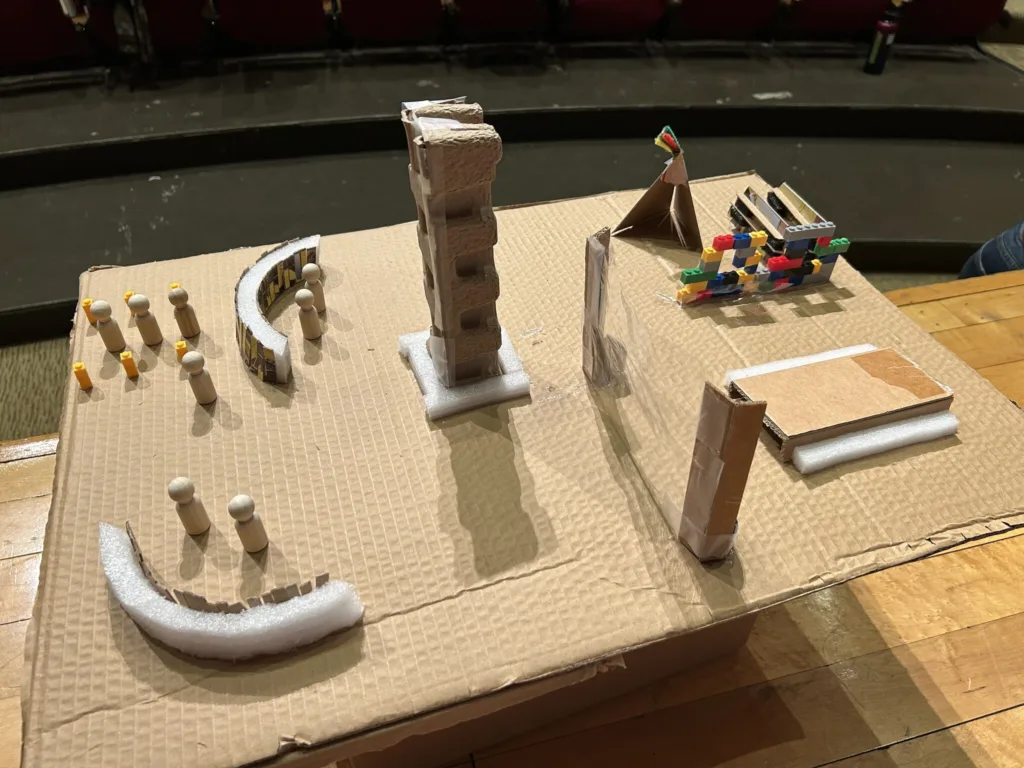
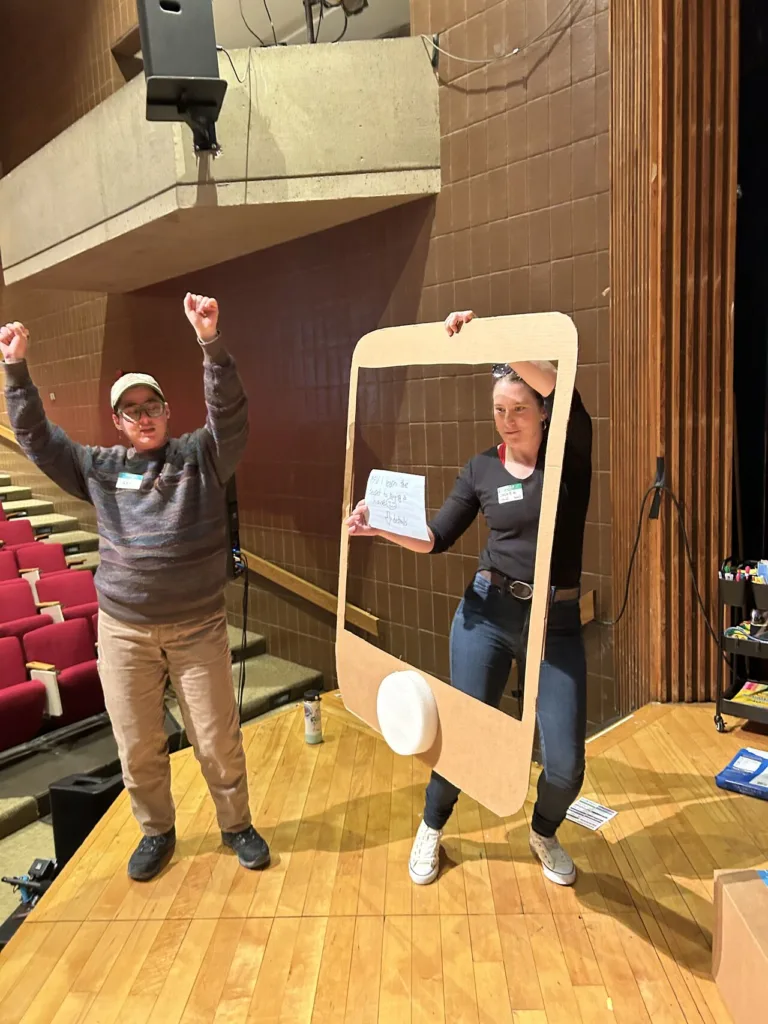
After our conversation and a quick lunch break, we had to get to prototyping. We decided that our presentation would be a skit walking through the service experience from outreach to event to post-event. We split into two groups to work more efficiently. My group focused on determining the outreach and post-event programming and the other group hashed out the structure for the event. We worked together to build some cardboard models like a phone prop and library space prototype. We got back together at the stage to unify our parts and run through the skit.
our teammate Haz made this amazing cardboard prototype of the library space
Presenting Community Conversations
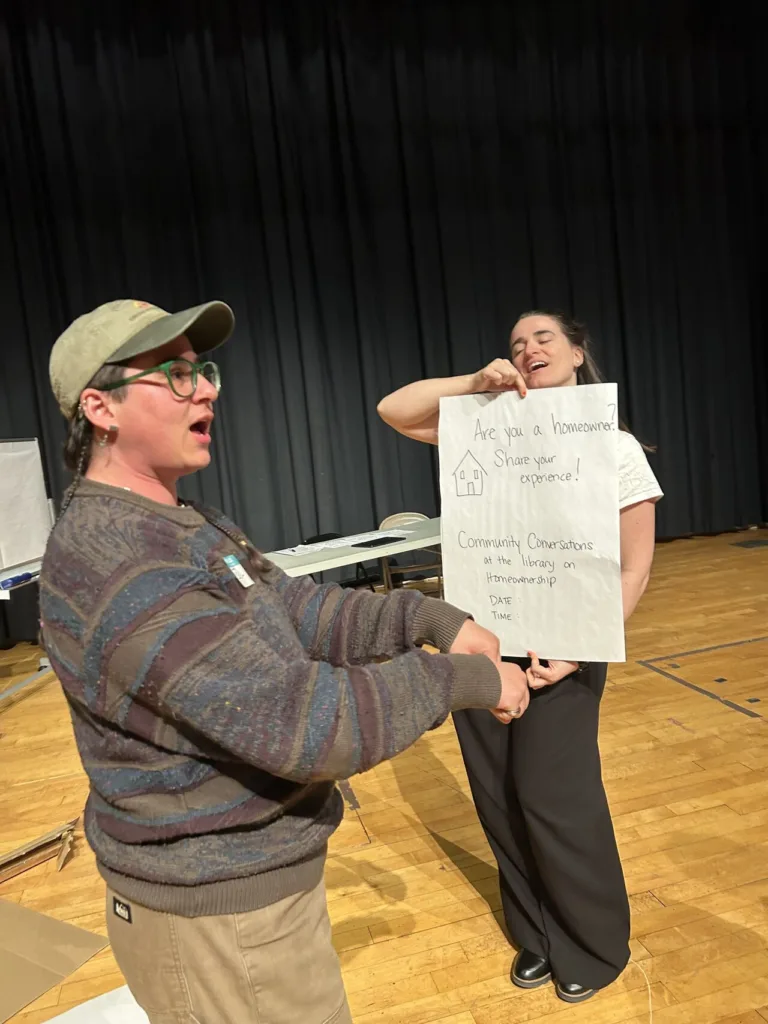
For our Community Conversation, we selected an example theme to ground our presentation in reality. Our theme was housing ownership with the mentors being home-owners, and the mentees being house-seekers. The conversation framework would center on how home-owners were able to purchase their house, complexities that are not common knowledge (like closing costs), and the different struggles that home buyers experience over time. We included a moderator to ensure conversation is productive and diffuse tension as well as a non-partisan expert to provide additional insights and resources. In this example, that might be a state housing official or a real estate agent.
Once we had a service structure, we talked to our second primary research contact to check our proof of concept, see if any similar programming already exists, and identify any gaps or challenges we hadn’t considered. We gained some new knowledge about the complexities how programming differs between library systems and funding challenges.
We had just enough time to run through our skit once and block out a general script before it was time to present. After presenting, we had a conversation with the audience, made up of the other Jam group, our mentors, and MassArt faculty. We explained our ideas and gained new directions for growth. I left the event feeling like we had a really solid service that could absolutely exist in the real world.
scripting & planning our skit
As I reflect on my experience at the Boston Service Jam, the goals of our service prototype are evident in the Jam itself. Making connections, sharing knowledge, and building something new. We all feel the same desperation for community. Of course, it was satisfying to see how far we came in such a short time. To go from a word cloud to a presentation in just two days was amazing. Events like these can be the spark to larger things. I left feeling inspired. I am excited to continue building the community initiatives I’m a part of and to incorporate this methodology into my design practice.
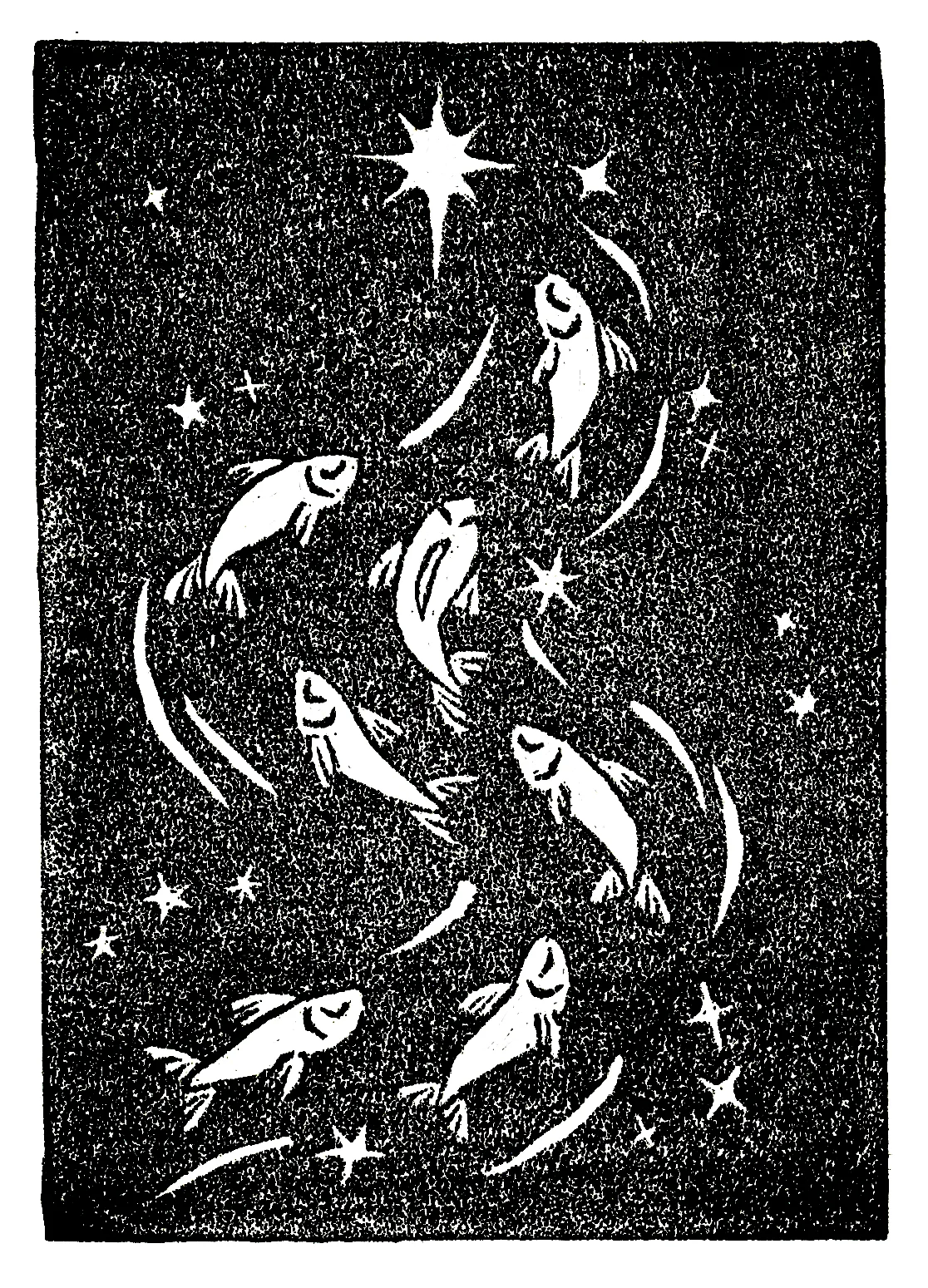
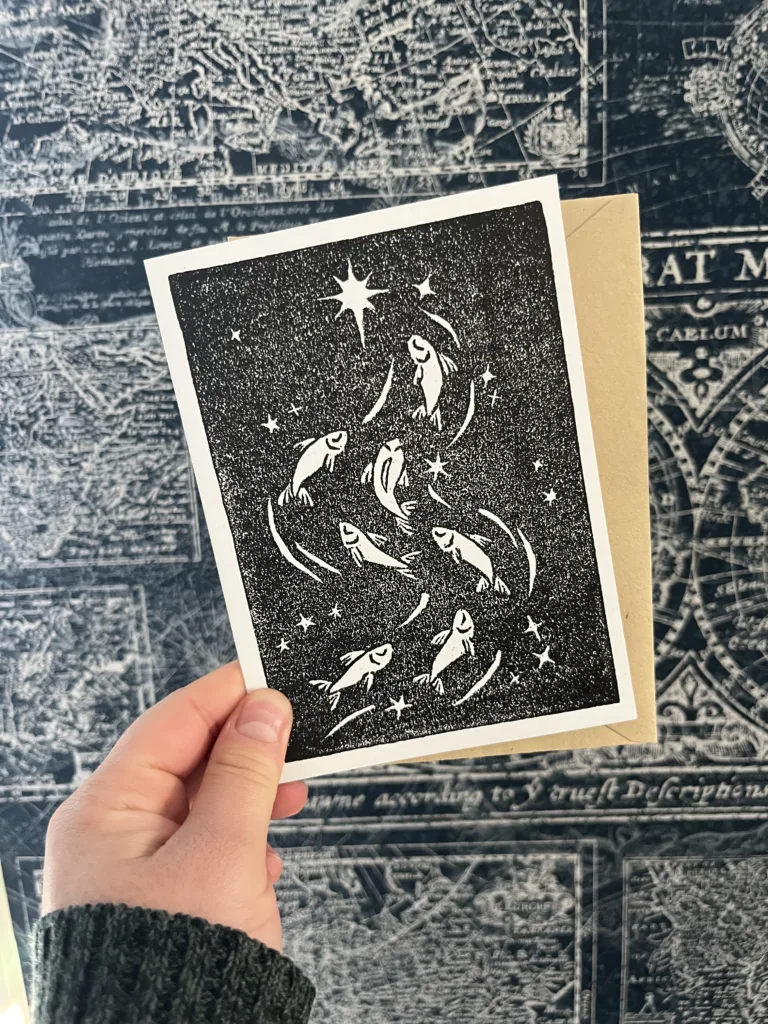
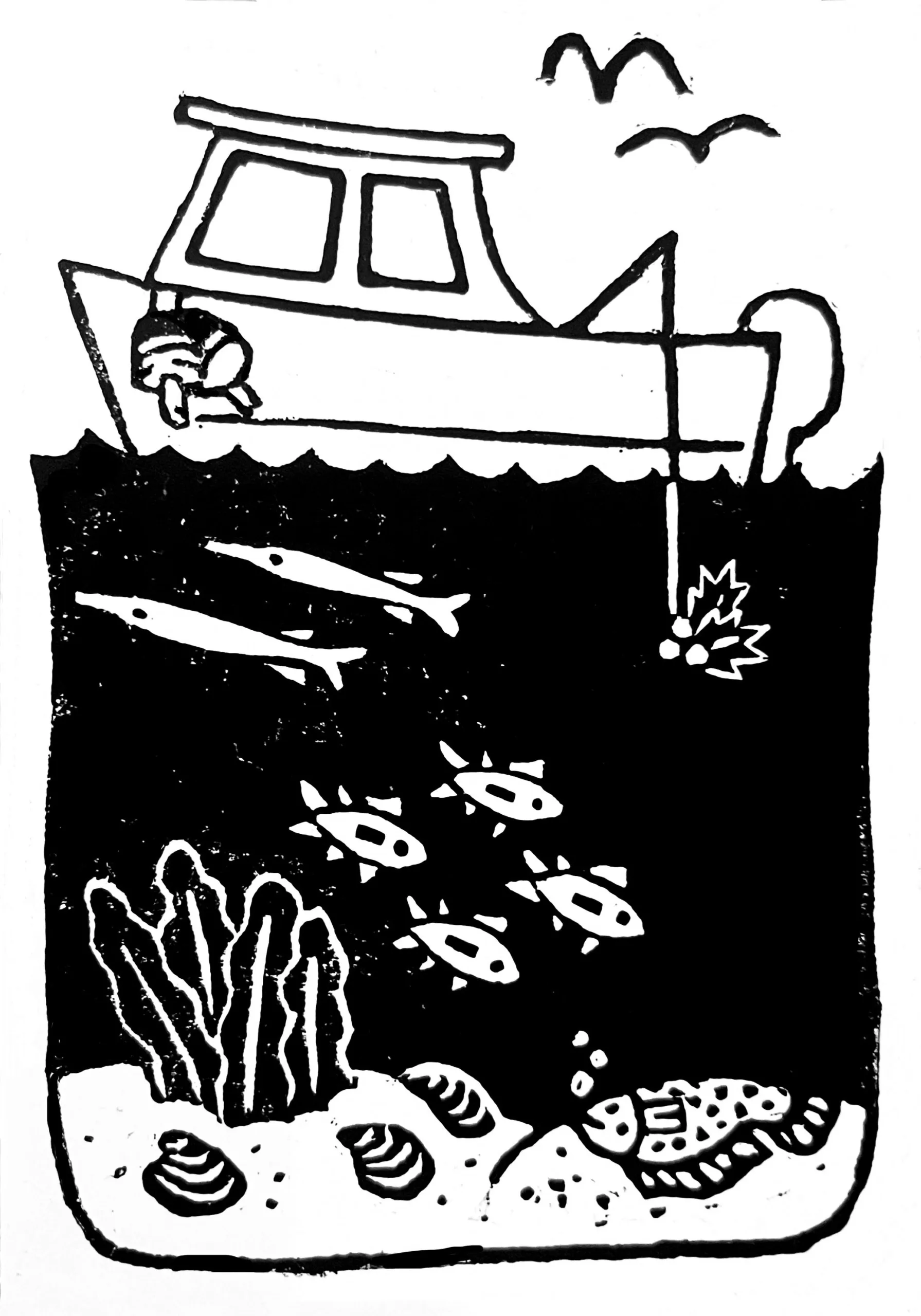
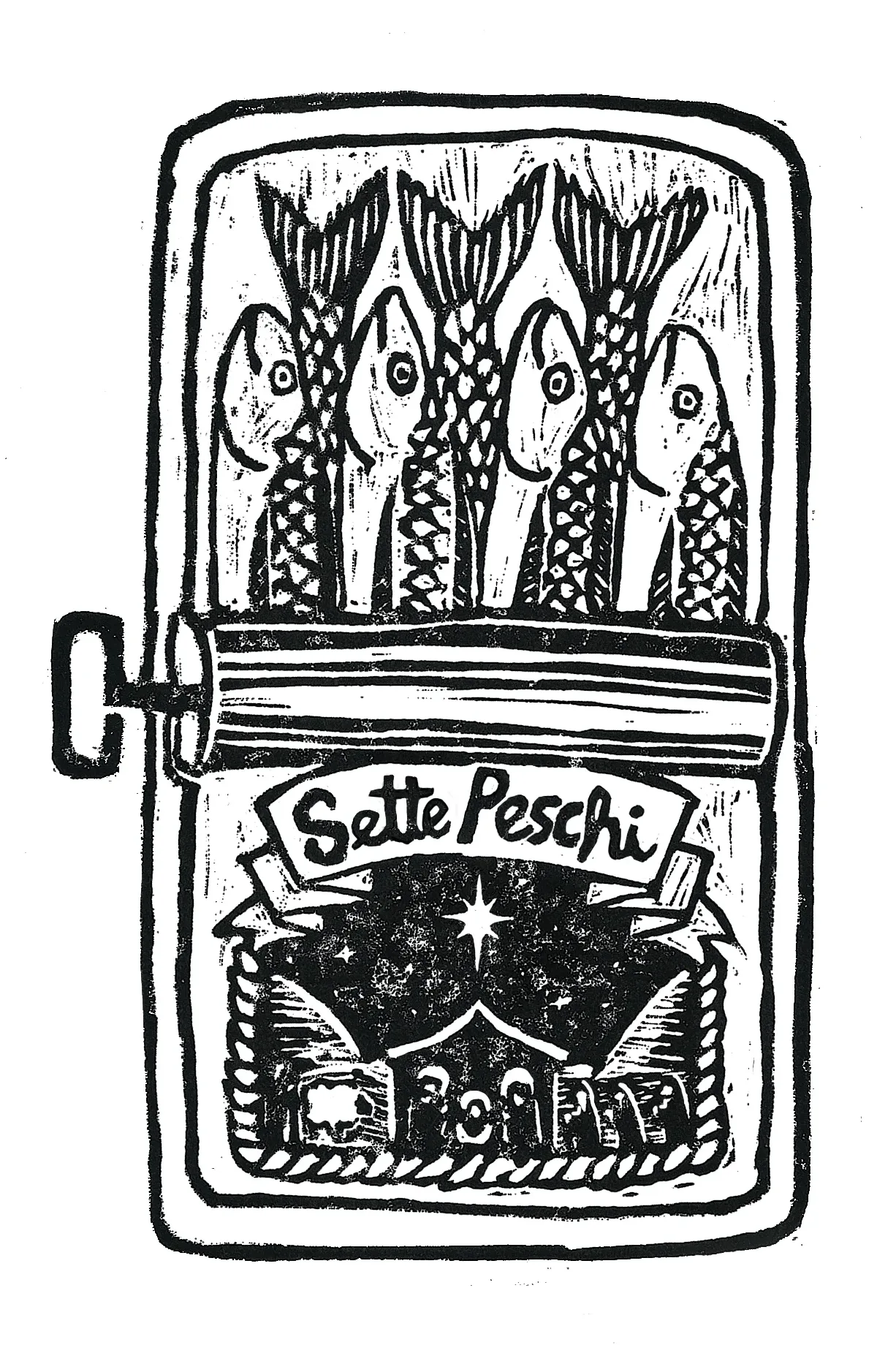
Folks who know me, know I’m a big believer in the art of gift-giving and celebrating the love I have for my friends and family. Rather than a traditional holiday card, I knew I wanted to make something original to give my art away for free. So, I decided to print a limited edition lino block print. I love printmaking and this gives me a great excuse to break out my carving tools and take over the kitchen to make some art. Each year, I make a new design inspired by the Feast of the Seven Fishes.
As a proud Italian-American, one of my favorite traditions is the Feast of the Seven Fishes. It’s a Christmas Eve tradition that grew out of the Catholic observance of fasting and abstaining from meat before Christmas and the parable of Jesus feeding the masses. In practice, we celebrate by eating seven varieties of fish during the Christmas Eve meal. In my family, we consider more than seven to be good luck (and also tasty), so we usually add for a few extra.
It’s Not Too Late to Get a Print!
In case you missed the initial release, previous year’s print designs are available as blank holiday cards.
I joined the North Kingstown Arts Council in the Spring of 2025. After just a few months as a member, I’ve seen how the positive effect my work has on my community and it has enforced my belief that we all can benefit from giving back.
What Made Me Want to Join?
I’ve always been a civically minded person. From volunteering at my hometown’s senior center in high school, to organizing games of tag to get active during the pandemic summers, I love to be involved in the world around me. I had thought about getting involved in local politics before, but town governance can be pretty opaque, especially for someone with no experience. When I was living in Boston (okay, Brookline) I had started researching the steps to get involved in a committee there. But as soon as I was ready to hit send on an inquiry, I moved to Rhode Island.
One of my first impressions moving to North Kingstown was how artistic the community is. From the numerous artisan shops to the art association, there is art everywhere. I felt immediately that I could be a part of a something bigger. During the summer, there is a weekly free concert by the town beach. It’s the biggest series in the state and draws hundreds of attendees from near and far. It was one of the first things I learned about North Kingstown and I have enjoyed many warm summer evenings getting dinner from a food truck and listening to live music. These concerts, I learned, are organized and sponsored by the North Kingstown Arts Council.
How Did I Sign Up?
After a few months of settling into my new home, I started to look for ways to get connected with my neighbors. Luckily, some awesome folks, coincidentally my neighbors from a few streets away, started a community group called Gather NK. Their mission is a monthly meeting space to meet your neighbors and give back to the town. They host a potluck followed by a service/activity such as a trash pickup and hike or walk through town with the local historian. At one of the meetings, I met a current member of the Arts Council who encouraged me to join. Thankfully she followed up with an email connecting me to the chair of the council and a link to the application. And honestly, it was easy to join. I filled out an application with a little about myself and my interests. That got approved by the Town Council and I got that approval notarized at the library. All in all it took about 2 weeks.
What Do I Do With NKAC?
After joining, the main volunteering service is just attending the monthly meeting. We review and approve funds to creative projects, ranging from concerts to events at local museums to grants for artist installations. Once I got there, I realized I could contribute my design skills with social media management, flyer design, and website management. I knew I could improve their online presence and just 3 months in, I had grown the Facebook page by 150+ followers and 50k views and had launched their Instagram account and grown it by 100+ followers and 5k views.
It’s as simple as this: give what you can.
I know a lot of us feel hopeless right now. With so much out of our control, whether it’s national politics, climate change, or the cost of groceries, it’s easy to feel hopeless. But that’s exactly when you have to realize you are not powerless. Sure, you’re not going to fix the whole entire world, but what about thinking smaller? What about helping your community? Surely you have a couple hours a month or $20 bucks that you could donate to something that matters.
I recommend starting with something you know you can do. As an artist, I know art. And I care about art in my community. I want to see more art in my world. It’s not running for president, but it counts for something. The NKAC’s summer concerts provide an evening of free cultural enrichment for hundreds of my neighbors, our support allows for students to expand their access to cultural education, and our initiatives allow visual, musical, and performing arts to flourish in our town.
So think about what you care about. Food access, transit, environmental protection, senior services. Find something you know you can make better. Find a group of other people trying to do the same thing. Start showing up. Meet people. Build your community. Grow from there. You’d be surprised how satisfying it is and how easy it is to make a better world possible.
I know people feel very strongly about AI and so I wanted to give a brief overview of the role AI takes in my design practice. I’m not going to rehash the argument everyone has been having but I will give you my two cents so you know what you’re getting when you work with me.
Generally I agree with all of the criticisms that are leveled against AI. Models were trained on unethically sourced data. It does consume far too much resources in a world that needs to focus on reducing its energy and water use. It is being used as an excuse for laying off thousands of workers. It isn’t really doing the things it’s owners say is should. But its important to not be afraid of the bogeyman. Nothing in the world is black and white, and this issue is no exception. There are obviously useful applications for AI. No, not Studio Ghibli-ing your profile picture. But boring stuff. Like NLPs that make it easier to find a specific diagram from an instruction manual. Or medical advances from generative algorithms catching things humans haven’t.
In practice
In my practice, I generally take a human-first approach to design. An that means there usually isn’t space for generated content. My art style and aesthetics are driven by the human-made mark, which is something AI cannot replicate. My work is all about connecting your business to your customers in a way that is authentic to you and your services.
When I kick off a project with my clients, we will go over the use of AI in the project. I will never use AI tools without client awareness or consent. Any project I have used AI on will feature a clear disclaimer of how and what I used AI for.
In the interest of transparency, this is the list of AI tools that I have/do use:
ChatGPT for draft content and concept generation for minor copy such as social media captions. In practice, the tool is only used for guidance and all generated copy is rewritten and edited for my use.
Photoshop tools such as background fill or generative expand.
Adobe Express and Canva tools such as canvas resize and 3-D text.
Aaron Wade is a musician with a flair for the dramatic. He was looking for a web hub to host his discography of music, both solo and in bands. He had been struggling to build a site for months, but couldn’t find the time and bandwidth to finish it. He came to me to help him cross the finish line.
After discussing with Aaron, we determined the priorities for this project:
Define the visual system: Aaron had already set up a good baseline for the site, but it was missing the personal touch that would take it from anyone’s website to his website. I needed to establish a typographic and color system that would fit his subdued, yet dramatic nature and musical style. I ultimately chose a warm, earthy color palette, with some navy accents and a semi-formal serif pairing with some dramatic flourishes in the headings.
Create an easy to use system: Even though Squarespace is easier to use than some other CMS’s, it’s still not completely intuitive for the average person. I set up the visual system and templated blocks so that future updates will be easy for Aaron to complete himself. Post launch, I support my clients with a couple of weeks of on-demand support and design tweaks.
As with any of my website projects, I went through all of the page designs with a fine tooth comb, ensuring pixel-perfect responsive templates that look great on desktop or mobile. I also tuned the SEO of each page, adding tailored titles/descriptions, keywords, and alt texts.
Sel was instrumental in helping me finish my project. I’d been struggling to build an artist website for months but with a busy work schedule and free time better spent on my music, I couldn’t get the job done. Sel helped me get organized with a clear blueprint, unified the site thematically, and provided the knowledge and skills to finish. I now have a website that I’m proud to share.
Galoop is a warm, welcoming early education space where growth, play, and learning happen together. They host classes for children ages from 6 months to 4 years with their caregivers. Their unique program offers flexible schedules, diverse education and enrichment activities, bilingual story-times, and childhood development expert-backed care. After a working with Galoop’s founder, Cecilia, to refresh their website, she came back to me to design a brochure to cross-market the Galoop space in local businesses.
The brochure’s core goal was to explain what makes Galoop different from other early education spaces. Their ‘baby and me’ style is great for children and caregivers alike. We wanted to make sure the brochure could be used for years to come, so we focused on their core philosophy and their general class offerings. To bring some of Galoop’s whimsy into the brochure, I used playful holding shapes featuring some of the children and their caregivers having fun in the space. And for brand consistency, I incorporated some of the icons I had illustrated for the website project. I worked with Cecilia to determine the budget, materials, and production company.
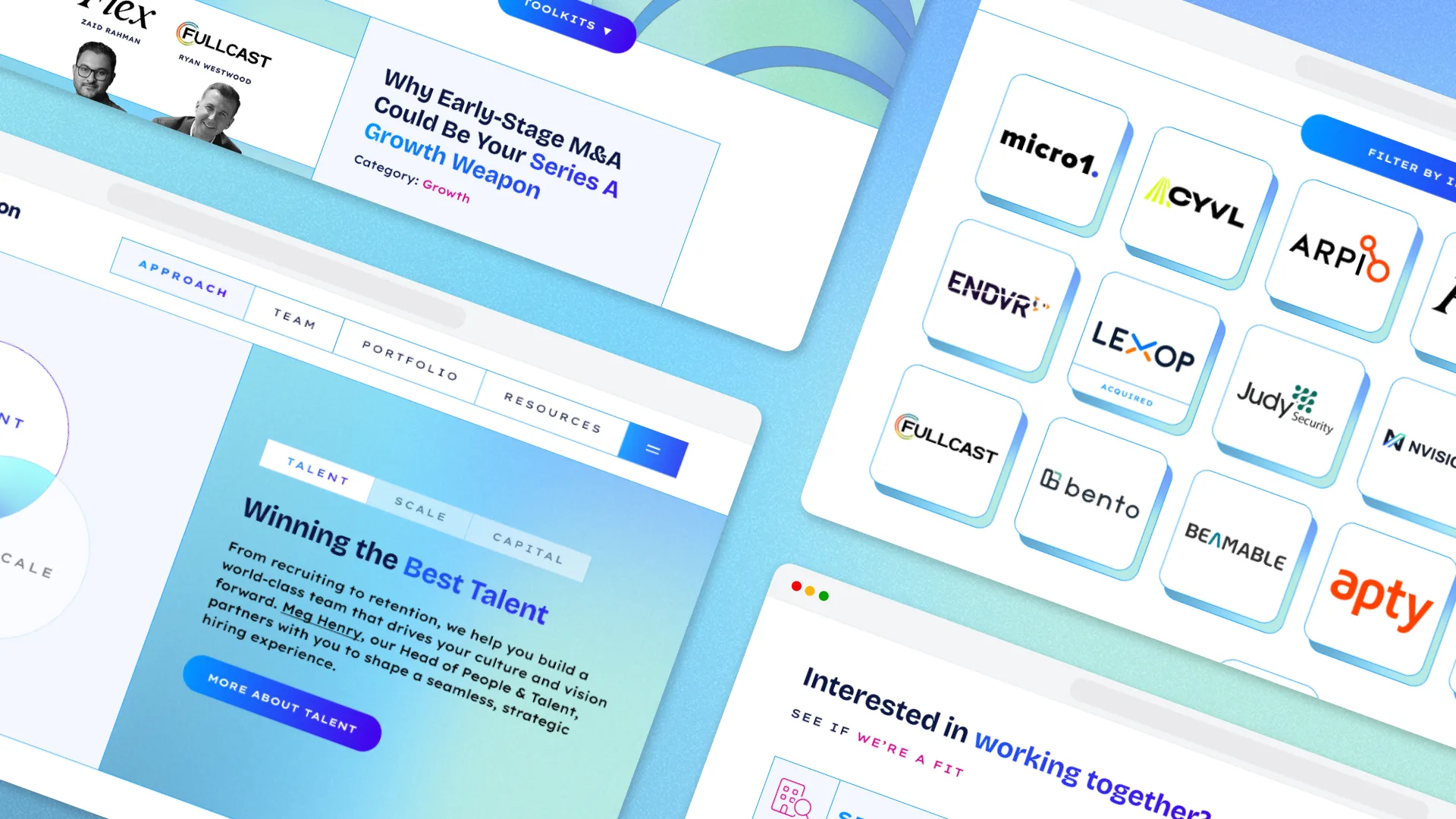
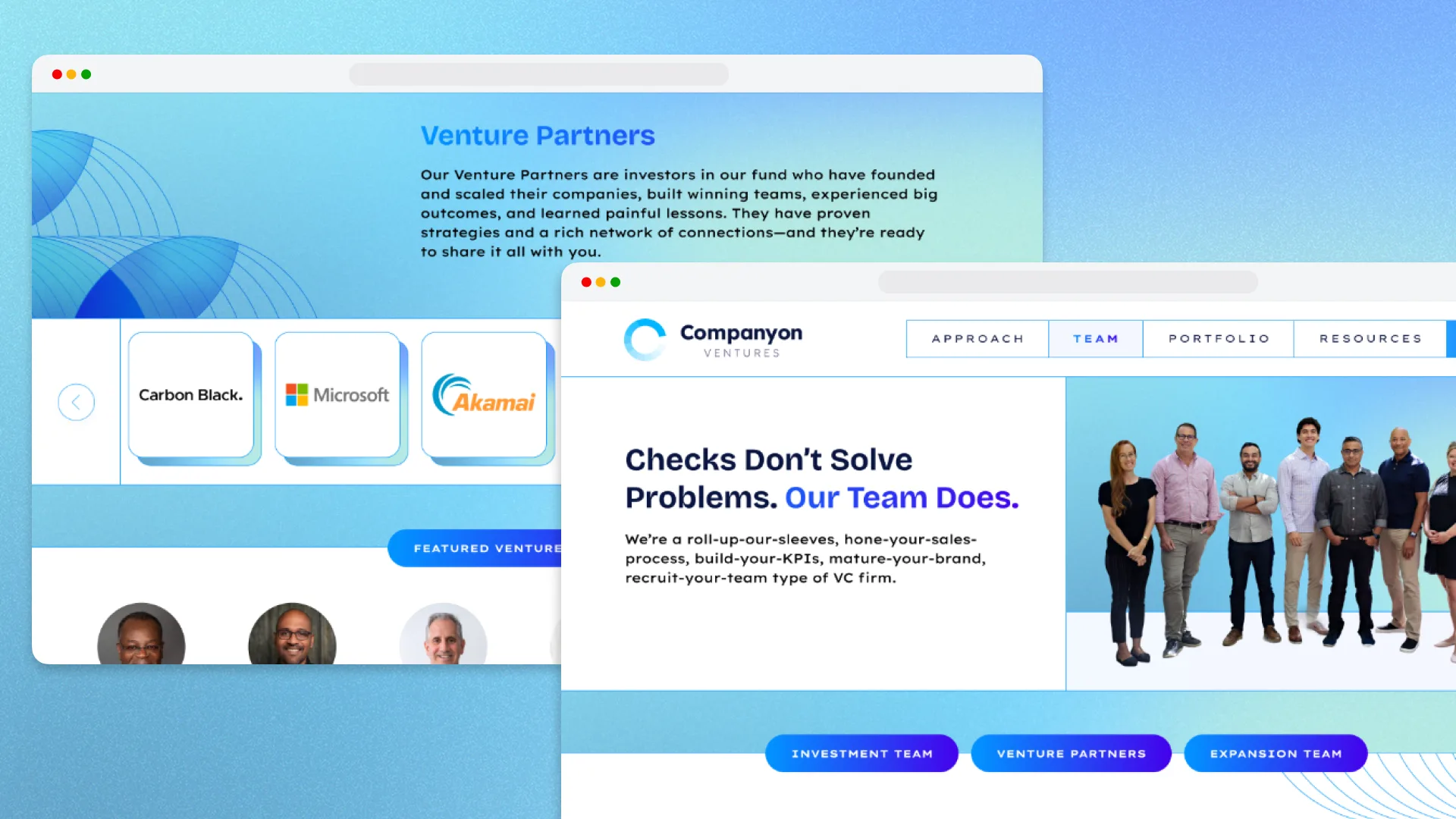
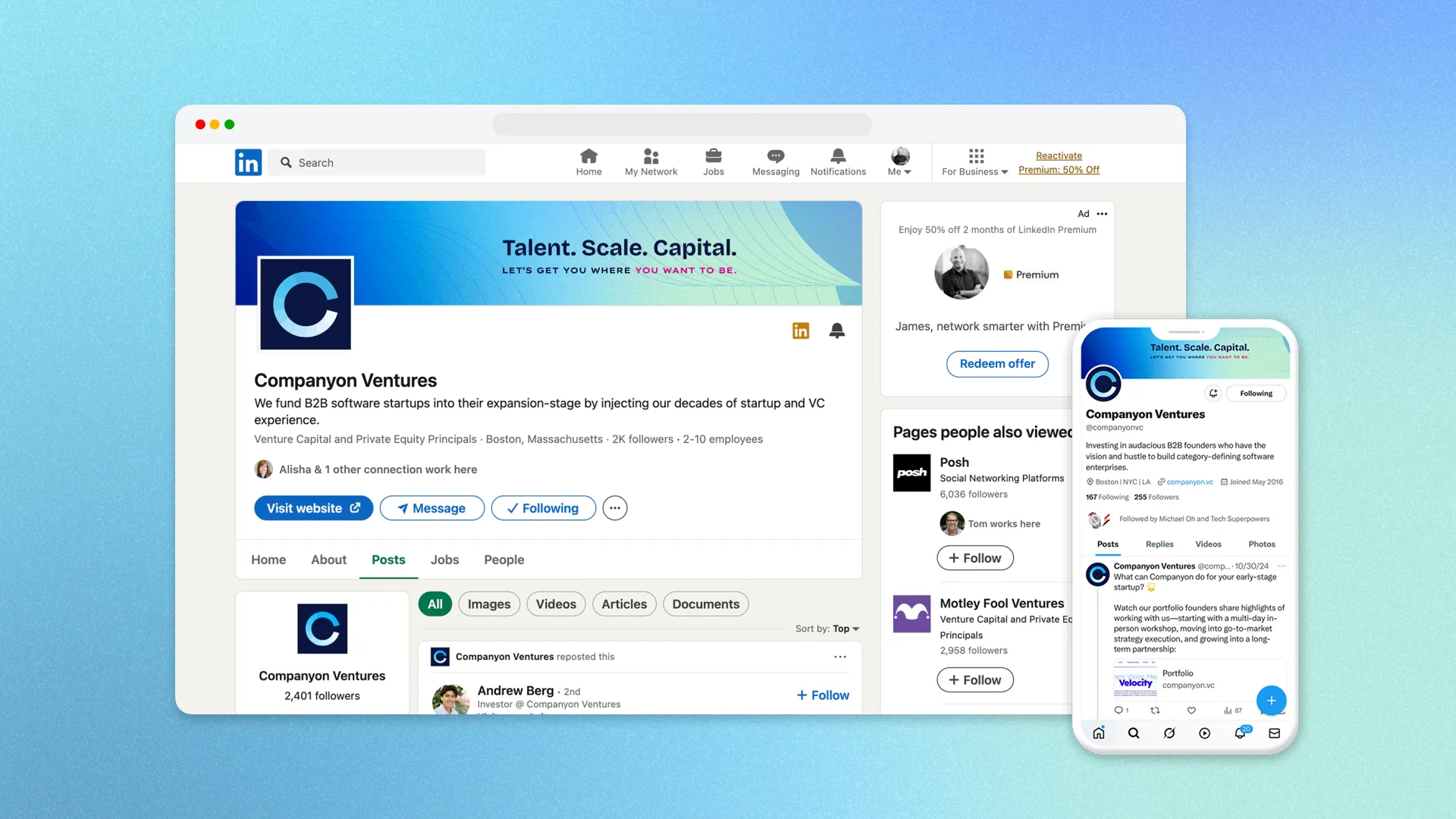
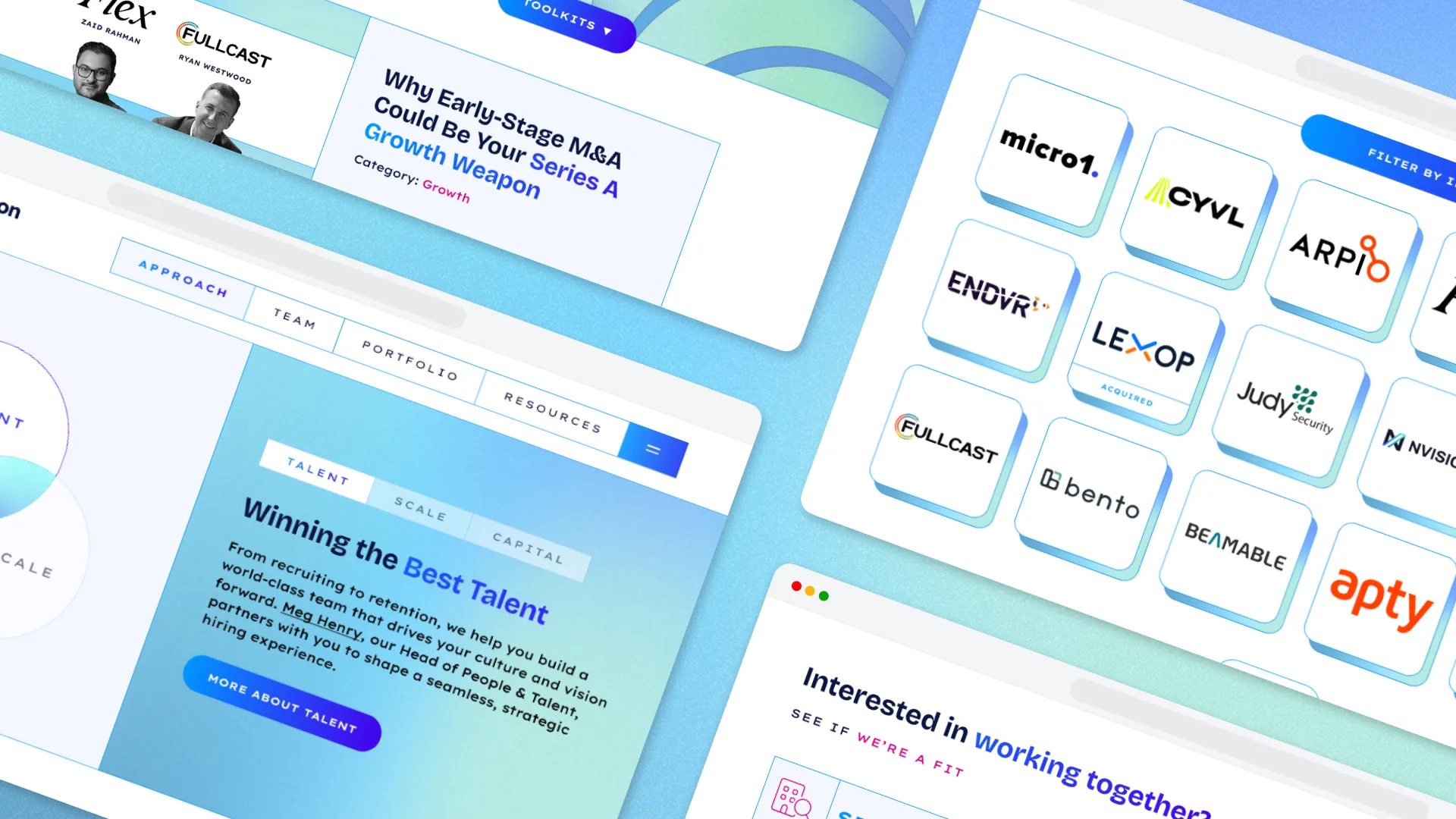
Companyon Ventures is a venture capital firm that does more than fund startups. They fuel momentum, support founders through the scale-up phase, and help shape what’s next. I joined the Design Axl team, led by James Grady, to reimagine their visual identity system and design a new website experience. Together with the agile Design Axl team, we built a brand and digital presence that reflects who Companyon is, where they’re going, and how they show up for founders and partners.
We used Figma as our core design and collaboration tool. Starting with a FigJam, we developed multiple mood boards to give us a solid visual foundation to build the new visual system.
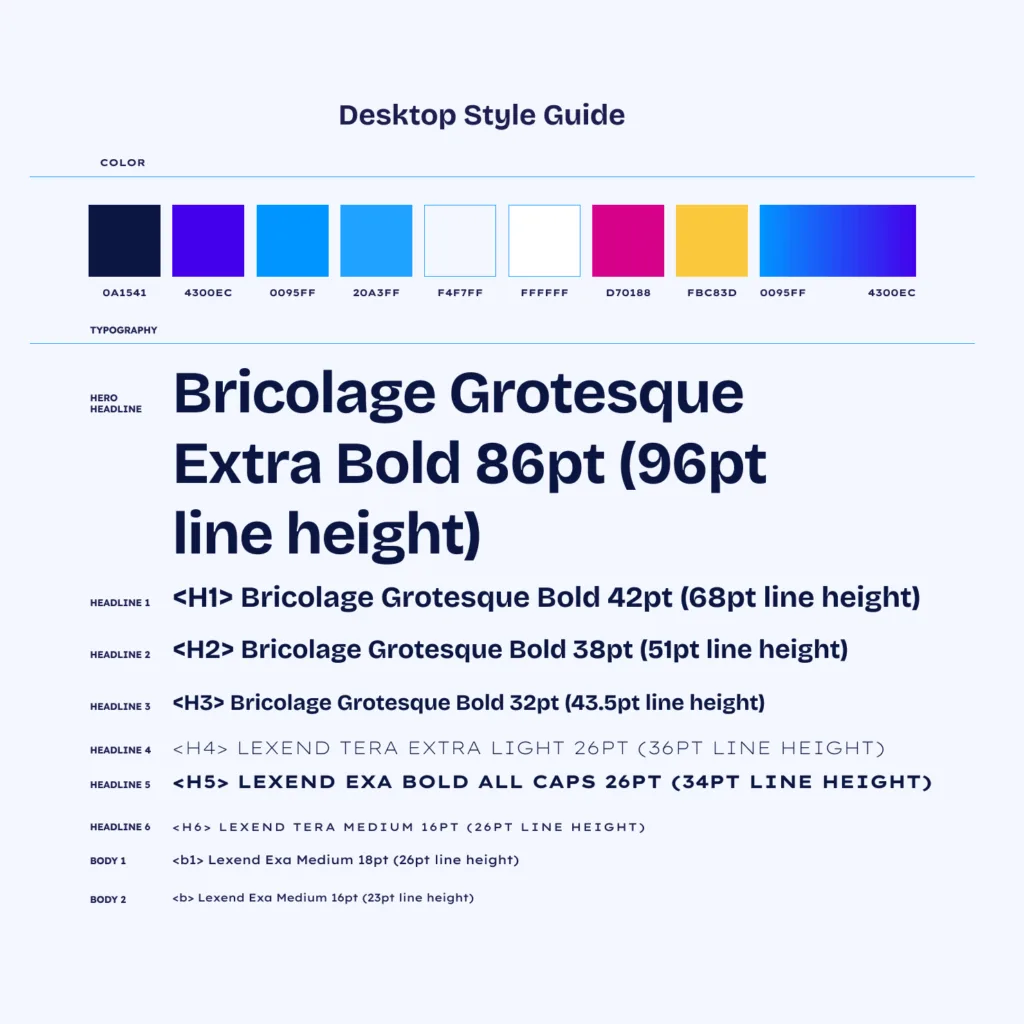
We redefined the color palette, keeping their core brand purple, but adding some warming blues and bright pop of magenta. We also updated the typography system with a more contemporary and humanistic feel. Finally, we developed a system of gradients that are both contemporary and timeless.
3. Website UI Design
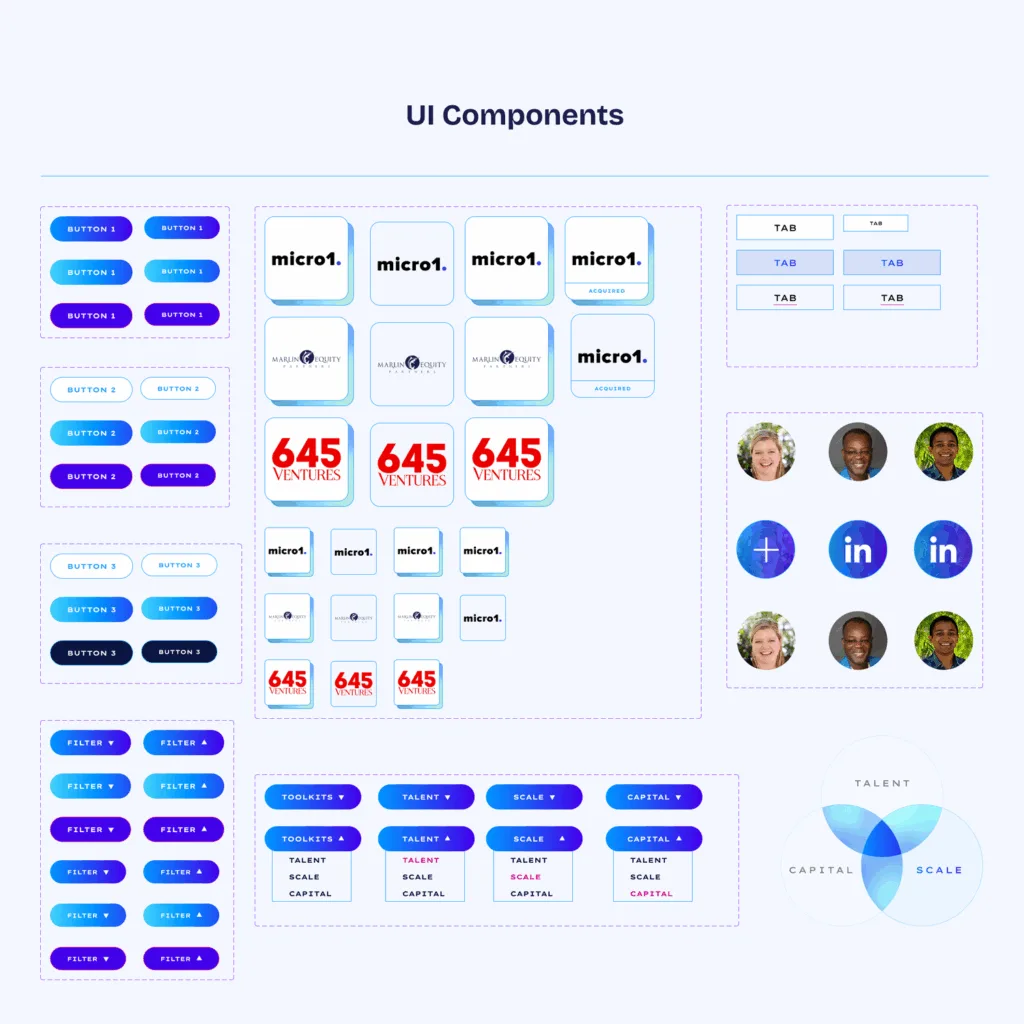
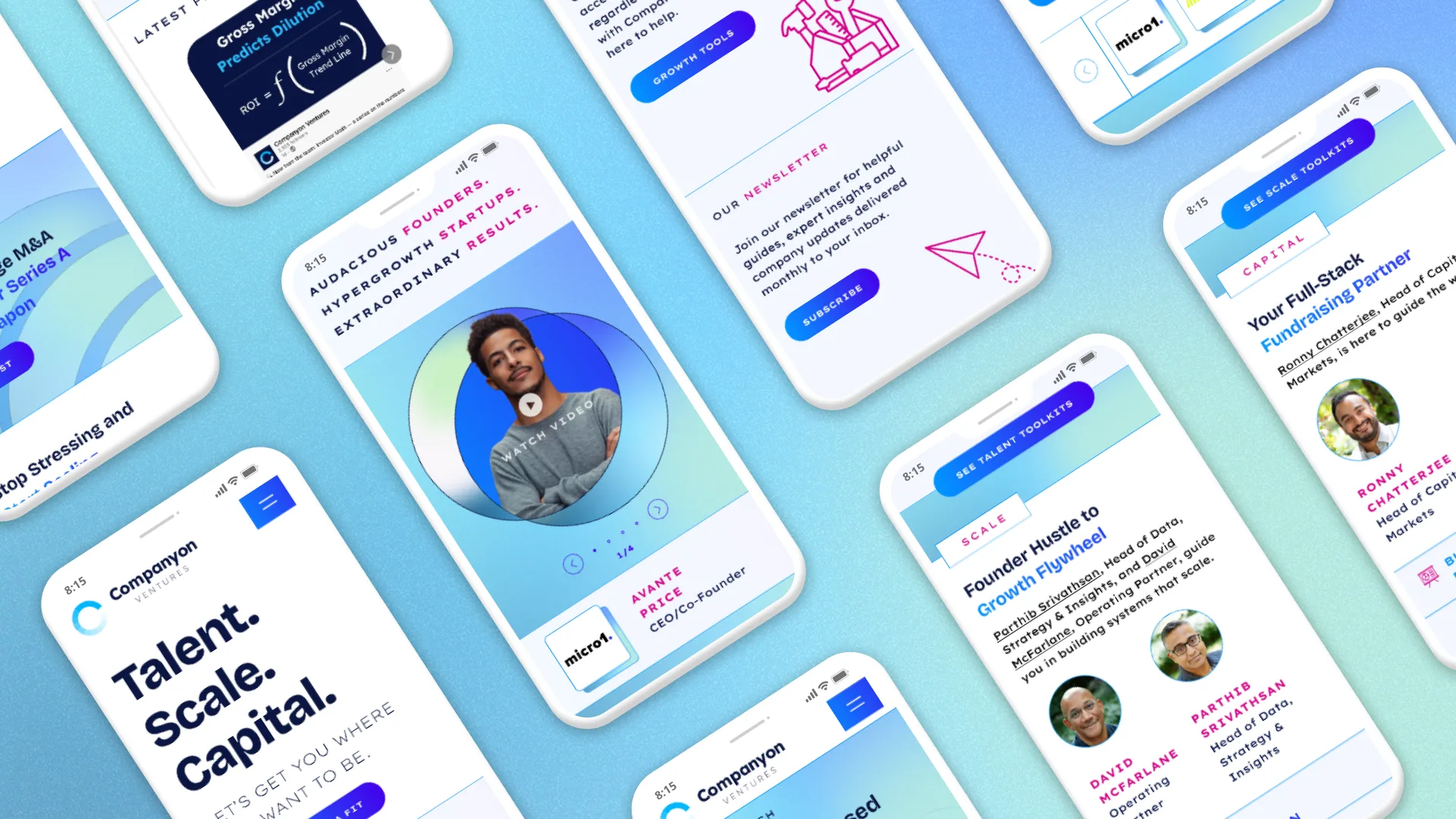
Once we had a strong visual foundation, we moved to Figma Design to build the website experience. We streamlined the on-page experience, focusing on Companyon’s value proposition, track record and team. In addition to leveraging the FontAwesome library of icons, I illustrated a suite of custom abstract line drawings used across the visual system. We developed a library of interactive components, including some skeuomorphic buttons, and developed fully interactive desktop and mobile Figma wireframes. Once we were satified with the design, we passed the files to CodeGreene to develop the WordPresss website.
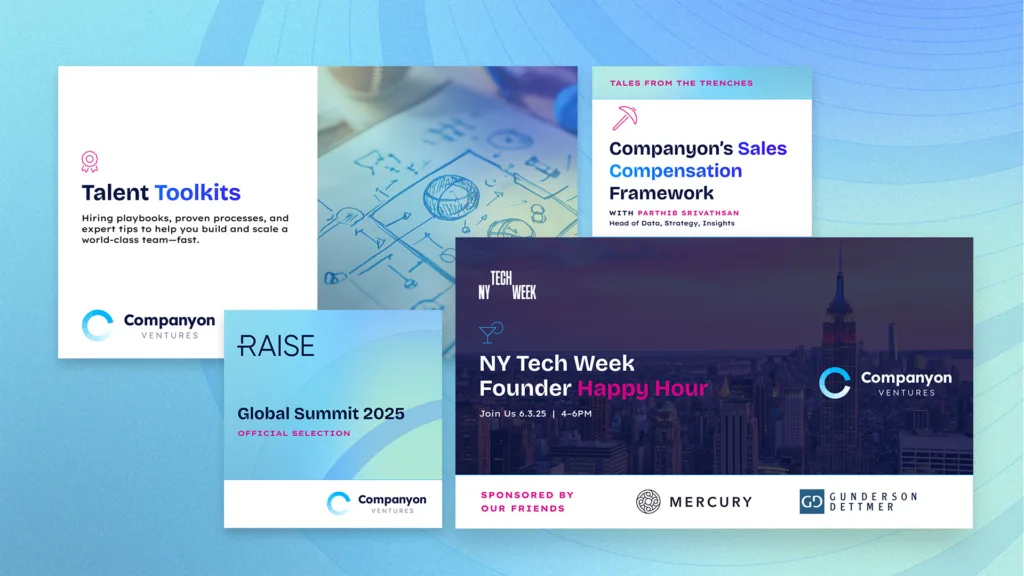
This project wasn’t just about the website. Setting our clients up for success is about creating a comprehensive, and repeatable, visual system that can be applied to digital, print, and motion projects, all while maintaining brand standards. We created a suite of toolkits including social media and video templates, profile pictures, letterhead, and business cards. Plus, we set up a structured toolkit archive and ran WordPress and Figma trainings so that the Companyon team can use their new templates with confidence.
Tom Lazay
General Partner, Companyon Ventures
We set out to modernize our brand, but what we ended up with was so much more—a unified strategy, visual identity, and toolkit that truly reflects who we are and where we’re headed. The Design Axl team brought clarity to our brand and gave us the tools to keep evolving. They presented design directions so strong, we could’ve confidently run with any of them—which made choosing a final path both exciting and incredibly difficult.
This site eats cookies (๑ᵔ⤙ᵔ๑)
This site uses cookies to store data. I'm only using it for analytics tracking, but you still have the right to reject or withdraw consent anytime! Check out the privacy policy to see exactly what is being stored. ty muah
Functional
Always active
The technical storage or access is strictly necessary for the legitimate purpose of enabling the use of a specific service explicitly requested by the subscriber or user, or for the sole purpose of carrying out the transmission of a communication over an electronic communications network.
Preferences
The technical storage or access is necessary for the legitimate purpose of storing preferences that are not requested by the subscriber or user.
Statistics
The technical storage or access that is used exclusively for statistical purposes.The technical storage or access that is used exclusively for anonymous statistical purposes. Without a subpoena, voluntary compliance on the part of your Internet Service Provider, or additional records from a third party, information stored or retrieved for this purpose alone cannot usually be used to identify you.
Marketing
The technical storage or access is required to create user profiles to send advertising, or to track the user on a website or across several websites for similar marketing purposes.