What’s a Service Jam?
In March 2026, I attended the Global Service Jam hosted by MassArt. The Boston Service Jam is a collaborative event centering on developing a functional prototype for a service. There are Service Jams across the globe and everyone gains inspiration from the same prompt. I didn’t know a lot about service design before joining the jam. But all of the skills needed are ones I already practice as a visual designer– creative problem solving, research and prototyping, and developing actionable results. And ultimately, this event looked like a lot of fun!
We had just 48 hours to speed run through the process of defining, ideating, and producing a functional prototype for a service. We were given a prompt that was pretty abstract. It gave us a lot of space to define a problem that our whole group was interested in solving.
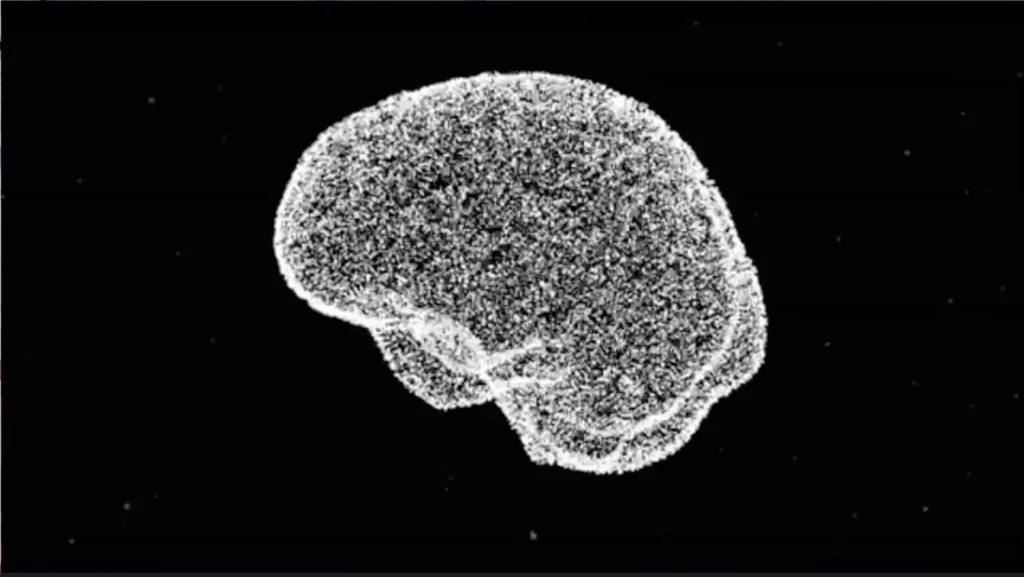
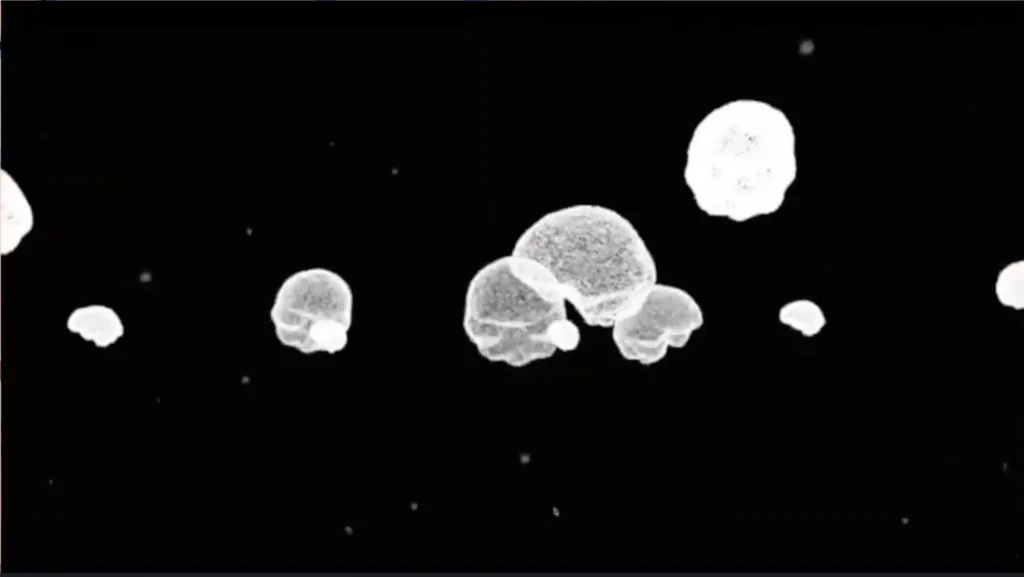
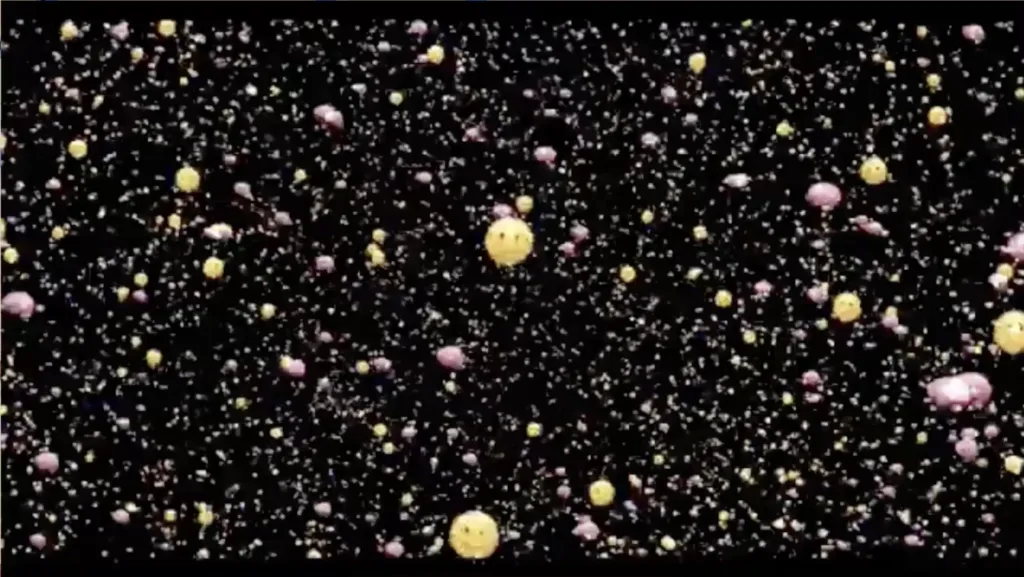
Some stills from the prompt video
Service Jam Structure
- Day 1 Morning: problem and opportunity
- Day 1 Afternoon: ideation and solution definition
- Day 2 Morning: prototyping, iteration, and testing
- Day 2 Afternoon: presentation and feedback
After splitting into groups, we started with idea generation. Inspired by the prompt, we wrote out any concepts and ideas on sticky notes. From our word cloud, we started affinity mapping, creating connections and refining down into the concepts we were the most interested in. Ultimately, the core issues we focused on were loneliness, the lack of inter-generational connection, and knowledge-transfer.
One of our primary challenges throughout the Jam was keeping our scope narrow. We had so many great ideas and a lot of passion behind all of them. But, we needed to focus if we were going to have a tangible presentation at the end of the Jam. After discussing with the team and our mentors, we finally refined our concept to a community-building event series at the local library.
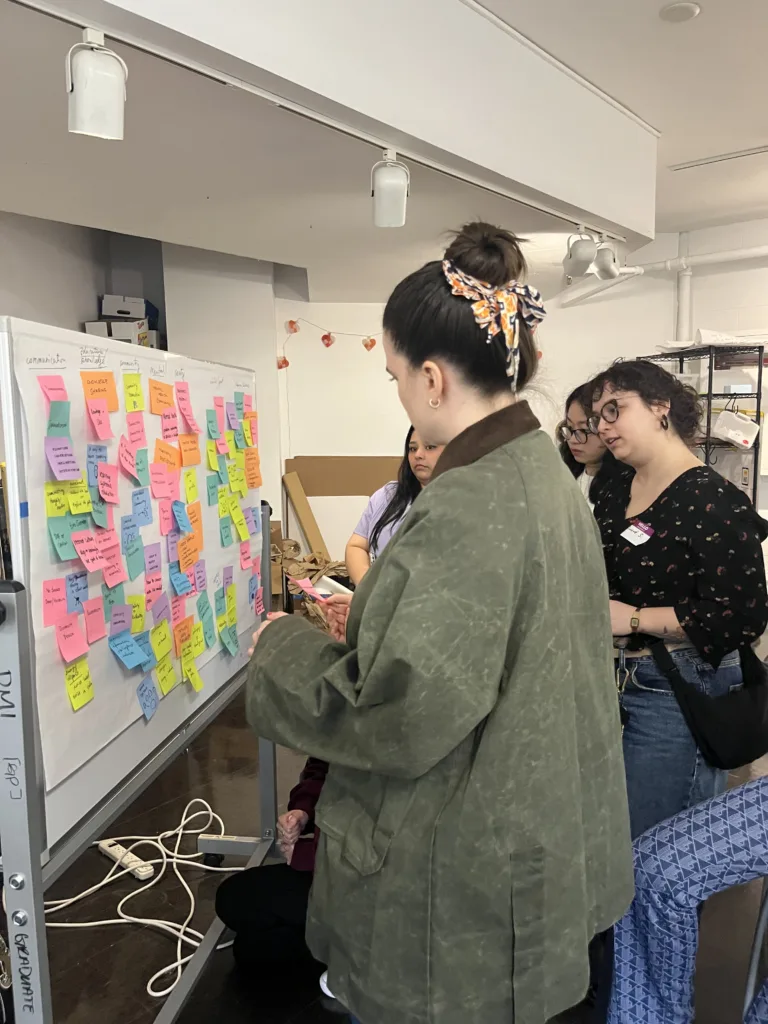
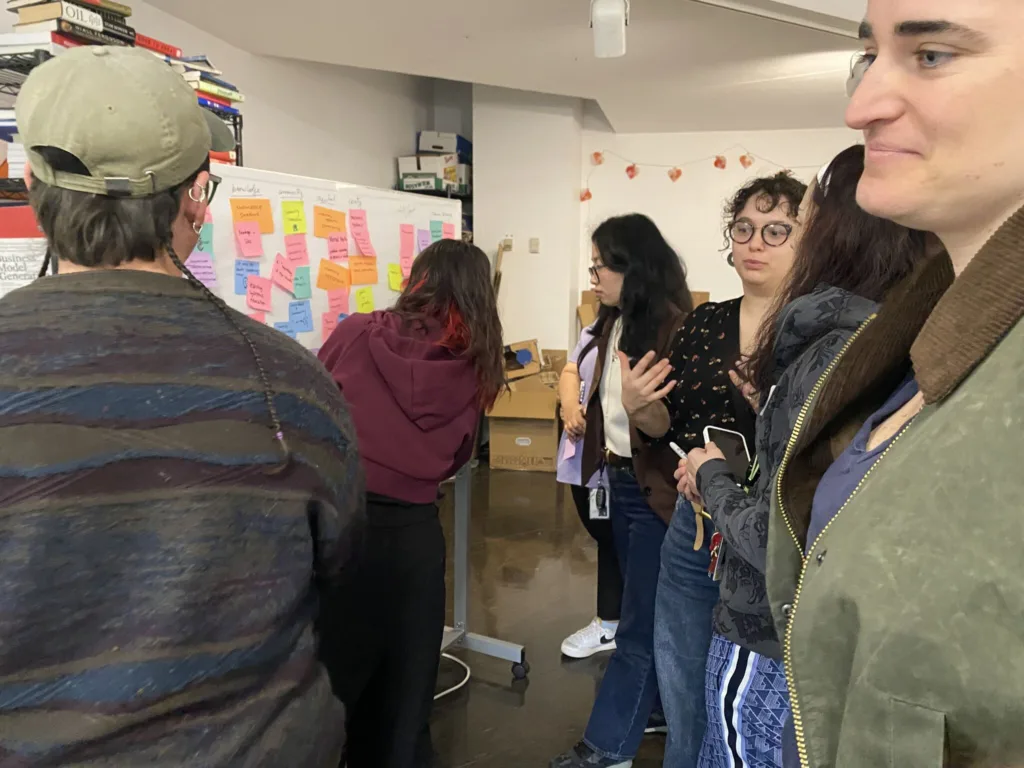
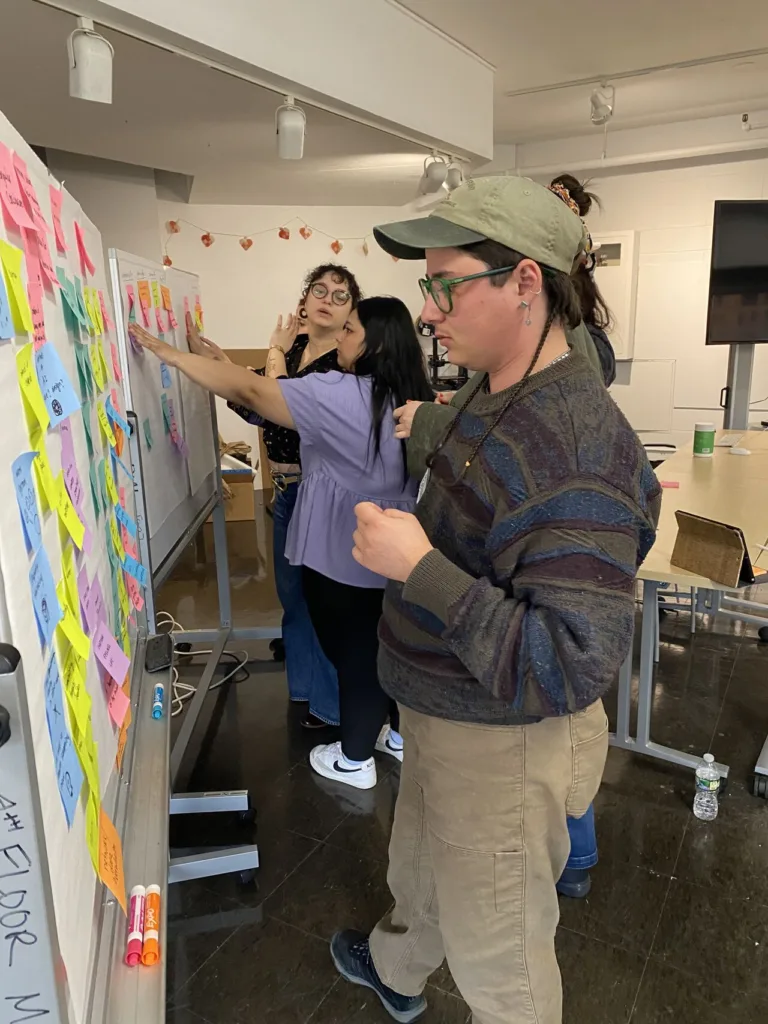
word cloud and affinity mapping
The Librarians
Libraries are a third space, or place that is neither home nor work, where people can exist without spending money. We considered recreation centers and community spaces, but decided to focus on the library because of their ubiquity across rural, suburban, and urban communities. Libraries’s role in society has shifted significantly in the last few decades. Beyond spaces for accessing books, many have taken a more holistic approach to serving their community, such as hosting events, connecting the public with professional services, and providing access to local museums and attractions. However, there is a gap between there is a gap between the public perception (a quiet and dusty space for reading) and reality of libraries as a vibrant and community-connecting space.
Additionally, we were focused on the concept of the village elder and the lack of knowledge sharing we see in our current society. Not only from old to young, but from young to old, from worker to homemaker, from student to teacher, and so on. After some discussion and narrowing our scope (again), we defined our service as a series of community conversations hosted at the library. These conversations would invite knowledge-havers/mentors and knowledge-seekers/mentees to come together in a semi-structured conversation designed to facilitate connection building and enable information sharing.
Our Service Goals
Research
Lucky for us, two of our mentors have spouses who work in local library networks. In our first conversation, we focused on gathering context and background information. We learned about the services that their library network provides (which was way more than we thought), their initiatives for expanding outreach to their communities, and their roadblocks. This gave us some important background to make sure our service was flexible enough to work with different library systems. Each has their own strategic agenda, leadership structure, resources, and limitations.
Prototyping
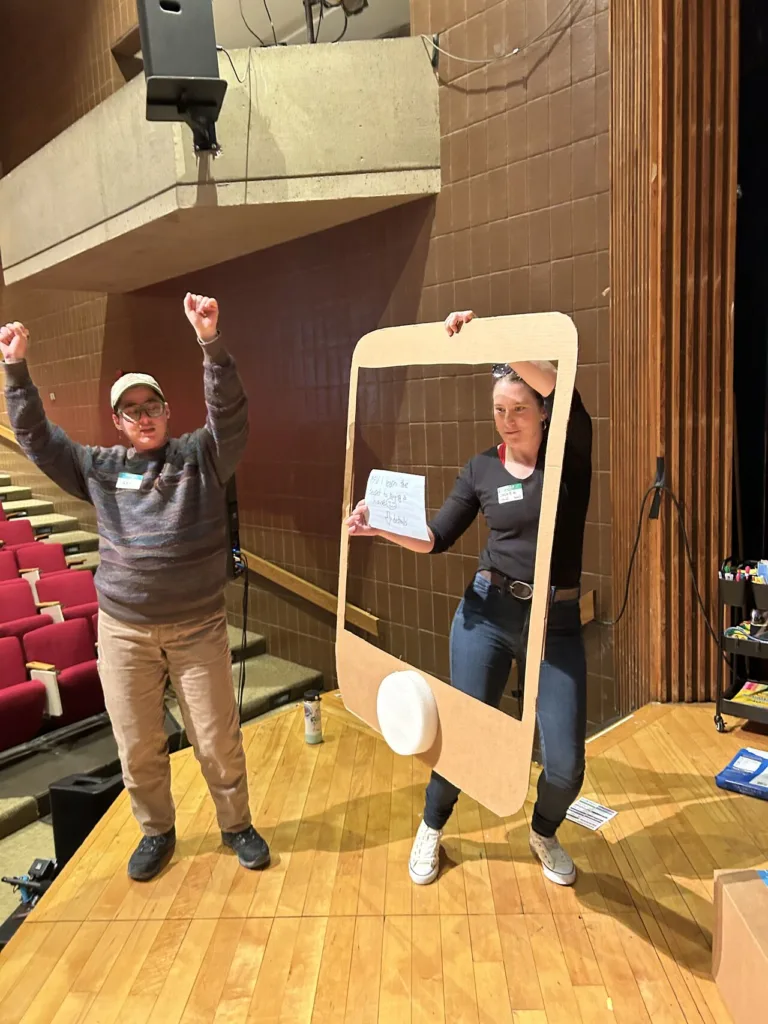
After our conversation and a quick lunch break, we had to get to prototyping. We decided that our presentation would be a skit walking through the service experience from outreach to event to post-event. We split into two groups to work more efficiently. My group focused on determining the outreach and post-event programming and the other group hashed out the structure for the event. We worked together to build some cardboard models like a phone prop and library space prototype. We got back together at the stage to unify our parts and run through the skit.
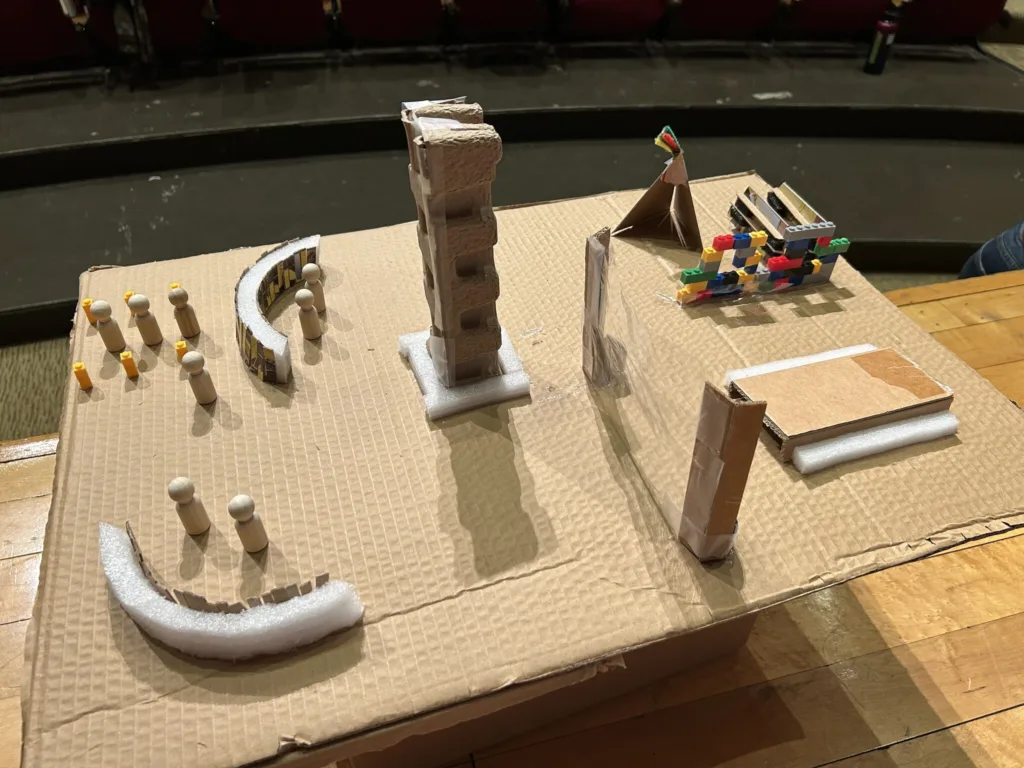
Presenting Community Conversations
For our Community Conversation, we selected an example theme to ground our presentation in reality. Our theme was housing ownership with the mentors being home-owners, and the mentees being house-seekers. The conversation framework would center on how home-owners were able to purchase their house, complexities that are not common knowledge (like closing costs), and the different struggles that home buyers experience over time. We included a moderator to ensure conversation is productive and diffuse tension as well as a non-partisan expert to provide additional insights and resources. In this example, that might be a state housing official or a real estate agent.
Once we had a service structure, we talked to our second primary research contact to check our proof of concept, see if any similar programming already exists, and identify any gaps or challenges we hadn’t considered. We gained some new knowledge about the complexities how programming differs between library systems and funding challenges.
We had just enough time to run through our skit once and block out a general script before it was time to present. After presenting, we had a conversation with the audience, made up of the other Jam group, our mentors, and MassArt faculty. We explained our ideas and gained new directions for growth. I left the event feeling like we had a really solid service that could absolutely exist in the real world.
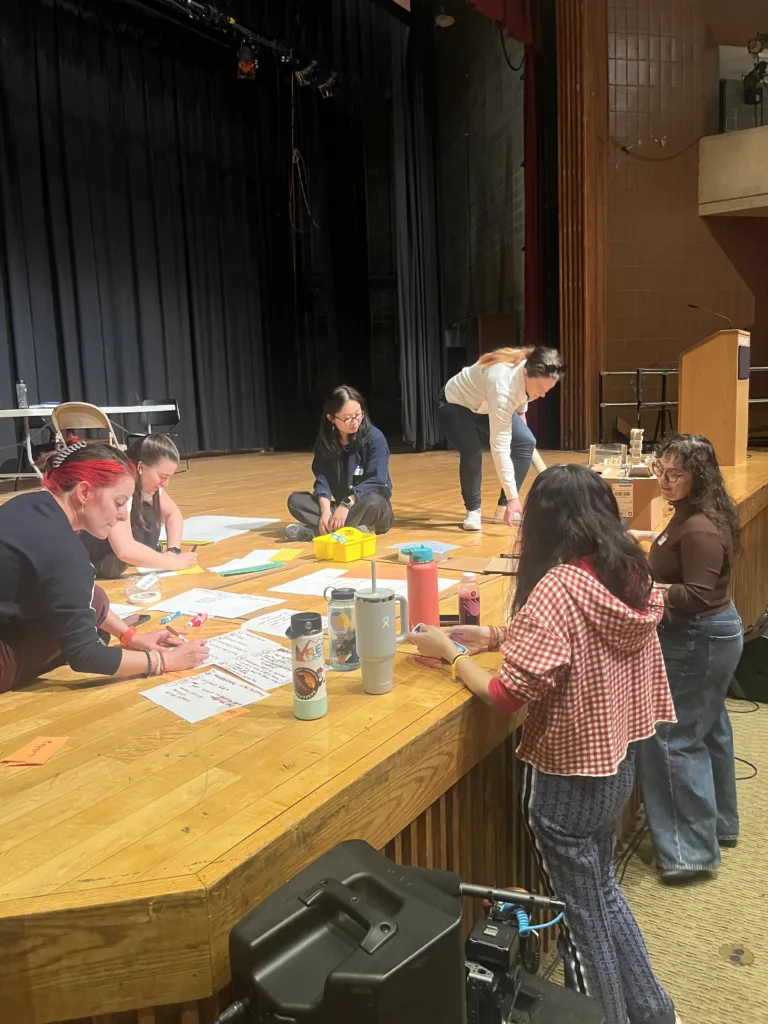
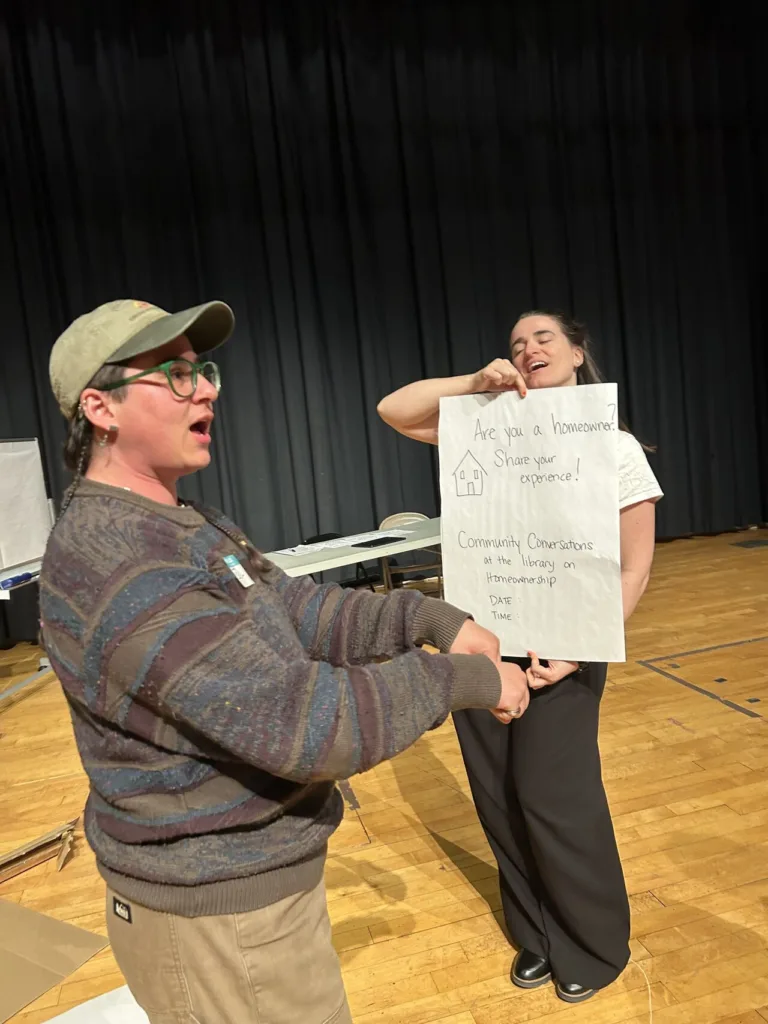
scripting & planning our skit
As I reflect on my experience at the Boston Service Jam, the goals of our service prototype are evident in the Jam itself. Making connections, sharing knowledge, and building something new. We all feel the same desperation for community. Of course, it was satisfying to see how far we came in such a short time. To go from a word cloud to a presentation in just two days was amazing. Events like these can be the spark to larger things. I left feeling inspired. I am excited to continue building the community initiatives I’m a part of and to incorporate this methodology into my design practice.